The Homeless Entrepreneur Mindset

“Harnessing our Collective Responsibility for Change”

Written by Rebecca Mazur

At Homeless Entrepreneur’s second visit to the annual World Economic Forum in 2019, Andrew Funk, founder, was in search of improving public and private relations. After sleeping out in the sub-zero temperatures (-20ºC) each night, Andrew and the team attended meetings and connected with other guests in attendance in the street and throughout the Promenade. Andrew met another activist for the first time, Fernando Morales-de la Cruz, who works towards ending child labor and forced slavery, in front of the Deutsche Bank free winter hat stand. Fernando has what Andrew describes as the “Homeless Entrepreneur mindset”, which is someone who helps empower people out of poverty using their own resources.

Meet Fernando Morales-de la Cruz, founder of Cartoons for Change, an organization that defends the right of all girls to education and demands that governments and corporation’s commitment to #ZeroChildLabor.

 With the participation of cartoonists and illustrators from all continents, they work collectively to defend children's rights, eliminate child labor and abolish slave labor in the supply chains of corporations and developed nations. The artists of Cartoons for Change are a random collective of individuals who work towards their moral responsibilities to end child labor and modern-day slavery.

Across the world, individuals unite to act on their moral responsibilities alongside a larger collective. We see this activity the face of climate change, systematic racism, oppression, and as a response to bad policy decisions. Cartoons for Change harnesses the power of talented artists from every contintent through cartoons, animations and illustrations to bring awareness to the 160 million children in child labor worldwide.

No person of goodwill should remain neutral when hundreds of millions of children are being exploited for child labor in rural communities and denied their right to an education.
— Fernando Morales-de la Cruz, Abolitionist. Founder of @Cartoons4Change @CafeForChange @SongsForChange @CacaoForChange to eradicate child labor, slavery & poverty @ItiMaMuseum @WeShare10Cts

Change begins with one individual with a moral responsibility to improve the lives of others. Strong messages resonate with others and movements grow into a collective responsibility that spans across communities, bringing awareness to issues that we can work together to resolve.

Individuals, like the artists at Cartoons for Change, are a part of a large collective responsibility, however change is in the hands of policy makers who enacts laws and business leaders that shape the future of society.

A company leaders are increasingly aware of the impact they have on society and need to build sustainable ecosystems for all stakeholders, not only their customers and shareholders, but also their suppliers, employees, talent, the communities that surround them and the planet they inhabit.
— Régis Badia from nae (consulting group)

A sustainable ecosystem is essential to the success of Homeless Entrepreneur, where we understand and encourage the participation of government and corporations in social rights relating to homelessness.

Housing First is an example of innovative public policy reassembling the possibilities of private housing for everyone with an ongoing partnership between the government, private firms and individuals. In 2014, Spain implemented a Housing First policy, called the Habitat program. The program relied on participation from a mix of public and private resources from local government, like the Ministry of Health, Social Services and Equality, bank foundation La Caixa, which supported cost-efficiency evaluations, and other private companies and individuals.

Homeless Entrepreneur’s Housing Launchpad utilizes partnerships with hostels in cities to turn them into short term housing for homeless people. Hostel are typically liabilities in the housing sector, but we believe that a partnership can change that into an opportunity for homeless people to live in temporary housing. While the hostel has been successful for the Homeless Entrepreneurs as they prepare to reenter the workforce, we continue to push for structural change to occur at the public level. 

Support our Launchpad Housing Program
Public-private collaboration is key to face the various current problems. It is true that there is such collaboration [city council and private firms], but now it should be increased much more.
— Marilén Barceló, Ph.D. in Psychology. City Councilwoman at Barcelona's city hall. President of Sant Martí district. Working with Bcn pel Canvi .

The government and private sector have a responsibility to protect social rights and invest in human capital. Policy Officer at Housing Europe, Edit Lakatos, believes that the responsibility to protect social rights lies within the government and should enable the private sector to contribute to fulfilling right to housing, which is currently the case as much of public housing within the EU is built and maintained by private companies.

Where the private sector can and should contribute is the financing of housing and social support and the increasing use of Corporate Social Responsibility (CSR) principles, Environment, Social, Governance (ESG) criteria and some initiatives like impact investment can pave the way.
— Edit Lakatos, Policy Officer at Housing Europe

Private companies can contribute to sustainable ecosystems for job creation, skill building and dignified, affordable housing. CSR is a business model that encourages ethical business with moral values and respect for people and the environment. Private firms can evaluate their contributions and collective consciousness within the social, governance and environmental spheres, such as employment, diversity, organizational structure, and greenhouse gases.

Through movements such as Cartoons for Change, Housing First and Homeless Entrepreneur’s Housing Launchpad we can come to understand the importance of collective and corporate responsibility to empower people out of poverty. We can change one person’s life but with collaboration and strong partnerships between the personal, private and public, we can work towards expanding social rights for the most vulnerable members of society, the homeless and children. Cartoons for Change message to achieve #ZeroChildLabor calls on business leaders and policy makers to commit to stronger Corporate Social Responsibility and Environment, Social, Governance practices. The Homeless Entrepreneur mindset understands the importance of collaboration and being resourceful. We challenge the people around us to be better leaders and advocate for better policy for the issues we care about.

About the Author

Hello readers and supporters of Homeless Entrepreneur!

I am Rebecca Mazur, a social policy intern with Homeless Entrepreneur and I will be focusing on important topics relating to poverty, homelessness, and social policy in Spain.

I am currently based in Barcelona, Spain for a Study Abroad program, however I attend The College of New Jersey as a political science major. I have experience working with diverse and differently abled groups and assisting in housing and food programs for people who are struggling. My passion is helping others through social policy and programs that empower people to live meaningful, independent, and active lives. I am excited to be working with Homeless Entrepreneur and discussing important topics in upcoming articles.

Please donate, join the conversation and leave comments and feedback below!

Donate & End Homelessness!

Alleviating Homelessness: Empowerment-Based Model vs. Assistance-Based Model

Written by Rebecca Mazur

Thumbnail Photos (Left) by Diego Sanchez (La Vanguardia) & (Right) by Santi Burgos (El País)

Empowerment Based Model

HELP Program

Homeless Entrepreneur’s 12-month HELP Program is a comprehensive system that empowers people experiencing homelessness and poverty to integrate into long-term, meaningful employment. With a structured response and sustainable revenue growth, Homeless Entrepreneur aims to serve homeless people and completely change the way we think about homeless services by adding value to society.

Spain’s current housing solution for the homeless is laid out in the National Housing Plan (2018-2021). This plan includes rental, eviction and youth assistance; only about 25% of homeless centers in Spain are owned by the state, the rest being owned by NGOs and religious organizations. Due to systematic causes and societies perception of homelessness, organizations like Homeless Entrepreneur and our corporate sponsorships, like IBM & IEBS, play a larger role in redefining what it means to be homeless. We believe that giving people structured tools and skills to empower themselves is a more sustainable way to fix homelessness in Spain and around the world.

According to the National Housing Plan, the two systematic causes that limit the effectiveness and suitability of Spain’s housing program are first, lack of sufficient and accessible housing for the homeless, and second, lack of personalized job offers for the homeless. Even within the literature of the Plan, the word “housing” is mentioned 30 times more than the word “work,” conveying the disconnect between housing and employment (or unemployment) in European policy. Homeless Entrepreneur’s HELP program seeks to change the dialogue by prioritizing empowerment, which connects valued-employment to dignified housing.

Empowerment does not start with the government, working or even obtaining money. Empowerment ultimately comes down to an individual’s mindset and actions. People may be impoverished or “rich but not empowered”, so money is not necessarily the source of empowerment. According to Dr. Flügge, individuals and their community (neighbors, family, etc.) are the most important for support and empowerment.
— Barbara Flügge, author of Mobility Moves Minds
Example of Homeless Entrepreneur empowering its beneficiaries: Replacing a cardboard sign for a job contract.Photo (left) by Homeless Entrepreneur and (right) by Diego Sanchez (La Vanguardia)

Example of Homeless Entrepreneur empowering its beneficiaries: Replacing a cardboard sign for a job contract.

Photo (left) by Homeless Entrepreneur and (right) by Diego Sanchez (La Vanguardia)

Housing Launchpad Program

Homeless Entrepreneur’s Housing Launchpad Program is designed to turn a liability in the housing sector into an asset for addressing homelessness. It takes individuals from being homeless to living in dignified housing while simultaneously increasing their possibility of becoming an active and working citizen. Once a person has dignified housing, they work very closely with Homeless Entrepreneur’s support network to advance in sector-specific job training and recognizing their true professional potential. They work with programs like IBM’s SkillsBuild, in order to learn the skills to provide value to current and future corporate needs.  

Donate & Support Housing Program


Take Homeless Entrepreneur, Antonio Tomasio, for example. Antonio is enrolled in the HELP Program and consecutively, the Housing Launchpad Program. Antonio is a well-educated individual, who has a Master of Business Administration, and a doctoral degree in tourism. He has traveled to over 60 countries; has started a bar-cafeteria; and is an author of many books (these books are for purchase on Amazon). However, due to COVID-19, his situation became complicated, and he could not sustain his small business, wich led him to becoming homeless. Throughout all of this, Antonio continued to write, and is currently working on a novel for Homeless Entrepreneur called “Hidden Stars”, to provide a framework and narration of what it means to be homeless. While the tourism industry declined due to the ongoing pandemic, Homeless Entrepreneur encouraged Antonio to switch career paths and with collaboration with IEBS, he is now studying his master’s in digital management. This sector is current and highly valued in employment prospects, where Antonio can explore content creation and digital growth hacking.


Assistance Based Models

Universal Basic Income (UBI) is not a recent debate, it is an idea that is more than 200 years old, originating in Thomas Paine and Thomas Spence’s in The Rights of Man (1791), Agrarian Justice (1795) and The Rights of Infants (1797). Universal Basic Income is income paid by the government in regular intervals and fixed amounts to every citizen. What does that look like in real life? Every citizen regardless of income, gender, marital status, disability, etc. will receive government issued payments. In theory, how the money that is spent is entirely up to the individual, however this is a topic of great debate. Countries that have experimented with Universal Basic Incomed utilized control groups to test who requirements to receive a basic universal income, such as loans that need to be repaid and or controlling how the money should be spent, such as on education or healthcare for families.

Arguments for and against Universal Basic Income have been rigorously experimented and scholars and policy makers now have now have sustainable evidence to support the implementation of a Basic Universal Income within their country. However, not all agree with this policy, like Barbara Flügge, who feels that the policy is “too much weight on a society that is not ready.” Instead, society should focus on the urbanization framework, where federal governments give the rights to cities to decide appropriate income assistance for their citizens.

While Universal Basic Income is a well-known, widely debated policy, there has been other models in literature that deserve attention in the attempt to remedy and prevent homelessness. The Staircase Model and Housing First Model have been adopted in Nordic countries (Denmark, Finland, Norway and Sweden), which all have extensive social-democratic welfare systems. These policies aim to alleviate the issue of homelessness by providing housing either conditionally, or unconditionally to people experiencing homelessness. These policies are aimed towards individuals coping with addiction and mental health issues, however in less extensive welfare states, it is used to address a wider group of poor people who face homelessness due to affordability or who are temporarily homeless.


Staircase Model

The staircase model requires that the person must adhere to prerequisites in order to receive their own apartment. These steps offer accommodations in a stage, with independent living the ultimate goal they are working towards. This gradual approach is to ensure the ability of the individual to complete rehabilitation, or act in accordance with targets laid out for them.

José Carlos, a homeless person, living in a house managed by Asociación Realidades, within their Housing First program.Photo by Santi Burgos (El País)

José Carlos, a homeless person, living in a house managed by Asociación Realidades, within their Housing First program.

Photo by Santi Burgos (El País)

Housing First Model

The Housing First model founded by Sam Tsemberis is an alternative remedy for homelessness and does not require prerequisites in order for the individual to receive housing. They are provided with housing first, then care and support are provided second. Housing First originated as a response to the primary, staircase model, and has now been experimented in large- scale homelessness programs in Denmark, Finland, Canada, and France. The key components of this program are early stabilization, independent housing, flexible support and intervention methods. However, this method is subject to structural barriers, such as shortages of affordable housing for low income groups, especially in North American and European cities, according to the European Journal of Homelessness.


Why should you support the HELP program?

Homeless Entrepreneur’s HELP Program has already empowered 27 of people out of homelessness and poverty, and into stable employment and housing. Over a 12-month period, 7 stages must be completed in order to apply an encompassing and holistic approach to end homelessness for each individual. This ecosystem contains one coordinator and nine managers that will cover all aspects including: housing, health, professional development, training, finances, legal, communication, sales and general assistance: Homeless Entrepreneur knows that just giving someone a check every month is not enough to turn them into a successful and independent active citizen.

According to Homeless Entrepreneur’s founding president, Andrew Funk, “an important goal for HE is to inspire civic and institutional change in the status quo of how we end homelessness. By providing housing and job training we can change people’s lives, but ultimately, we hope to inspire a new framework of addressing homelessness. Our network of Homeless Entrepreneurs is constantly growing, which is why we focus on sustainable revenue growth streams that are initially supported by donors and partners.

‘Positive, forward-thinking contributions are extremely important in order to add sustainable value to society.’”

Support the HELP Program!


About the Author

Hello readers and supporters of Homeless Entrepreneur!

I am Rebecca Mazur, a social policy intern with Homeless Entrepreneur and I will be focusing on important topics relating to poverty, homelessness, and social policy in Spain. I am currently based in Barcelona, Spain for a Study Abroad program, however I attend The College of New Jersey as a political science major. I have experience working with diverse and differently abled groups and assisting in housing and food programs for people who are struggling. My passion is helping others through social policy and programs that empower people to live meaningful, independent, and active lives. I am excited to be working with Homeless Entrepreneur and discussing important topics in upcoming articles.

Please donate, join the conversation and leave comments and feedback below!

Donate & End Homelessness!

A Yearly Review of #HomelessEntrepreneur in 2020 in 11 Pictures & 1 Video

Some say pictures speak louder than words, so I've decided to put that to the test, so everyone can see how we've sped up the process of creating sustainable work and dignified housing for and with homeless people in our program once again thanks to our growing international community.

January

Homeless Entrepreneur represented homeless people who want to be active, working citizens in the World Economic Forum (WEF) for the third straight year, while building our relationships with the local and international WEF community.

“Homelessness means losing almost everything, except for the possibility of a stranger caring.” #HomelessEntrepreneur #WEF20 A special thanks to the @worldeconomicforum for giving us the opportunity to have a voice in Davos this year!

“Homelessness means losing almost everything, except for the possibility of a stranger caring.” #HomelessEntrepreneur #WEF20
A special thanks to the @worldeconomicforum for giving us the opportunity to have a voice in Davos this year!

February

As the Brexit’s transition period started, Homeless Entrepreneur unknowingly participated in its last monthly sleepout with the amazing support of Sir Marco Robinson, who leads FreedomX, which is a charity social enterprise program using blockchain technology.

Our monthly sleepouts called Everyone Sleeping in the Street had been held consistently for over 3 and a half years.

Sleeping out in Manchester for the first night was full of more conversations than actual sleep. Another homeless man named Les, who makes money playing the tambourine in the street, joined us. I missed the 2 hour conversation and singing between hi…


Sleeping out in Manchester for the first night was full of more conversations than actual sleep. Another homeless man named Les, who makes money playing the tambourine in the street, joined us. I missed the 2 hour conversation and singing between him and Marco because sleep got the best of me.
We were kindly woken up by security and their video camera at 7h57.
Then we started our day by having a conversation with a homeless guy who had already set up shop in front of a coffee shop.
If you’re in Manchester and want to speak with me, please reach out!

March

As Homeless Entrepreneur prepared for our 5th monthly sleepout at the Mobile World Congress, COVID19 swept the planet and we responded promptly by creating 4 new programs: General COVID emergency assistance, Homeless Helpline, Homeless Voices & Homeless Hostels Work.

Línea de ayuda para personas sin hogar  Si estás en situación sin hogar o conoces a alguien en situación sin hogar, contáctanos por favor. Haremos todo dentro de nuestros recursos para ayudar.  Contáctanos: Llámanos o envíanos un mensaje por WhatsAp…

Línea de ayuda para personas sin hogar

Si estás en situación sin hogar o conoces a alguien en situación sin hogar, contáctanos por favor. Haremos todo dentro de nuestros recursos para ayudar.

Contáctanos:
Llámanos o envíanos un mensaje por WhatsApp +34 697 877 089

#coronavirus #personassinhogar #homeless #HomelessEntrepreneur

April

Homeless Entrepreneur’s programs provide international support during COVID19 pandemic.

Explaining the situation of homeless people in Barcelona and the opportunities #HomelessEntrepreneur is providing them. #HomelessHelpline #HomelessHostelsWork #i24news

Explaining the situation of homeless people in Barcelona and the opportunities #HomelessEntrepreneur is providing them.
#HomelessHelpline #HomelessHostelsWork
#i24news

May

Thanks to the support of our Photography Director, Jose Sanabria, the Homeless Entrepreneurs are able to focus on improving their professional image to speed up the process of getting work.

Mil gracias a nuestro director de fotografía @josesanabriafoto por realizar la primera sesión de fotografía en nuestro programa de vivienda #HomelessHostelsWork para ayudarles con su imagen profesional en la búsqueda de trabajo! #HomelessEntrepr…

Mil gracias a nuestro director de fotografía @josesanabriafoto por realizar la primera sesión de fotografía en nuestro programa de vivienda #HomelessHostelsWork para ayudarles con su imagen profesional en la búsqueda de trabajo!
#HomelessEntrepreneur

June

50% of the homeless people who have participated in our Homeless Voices program are connecting with resources they are looking for.

A special thanks to Ivan Medina for making this program possible!

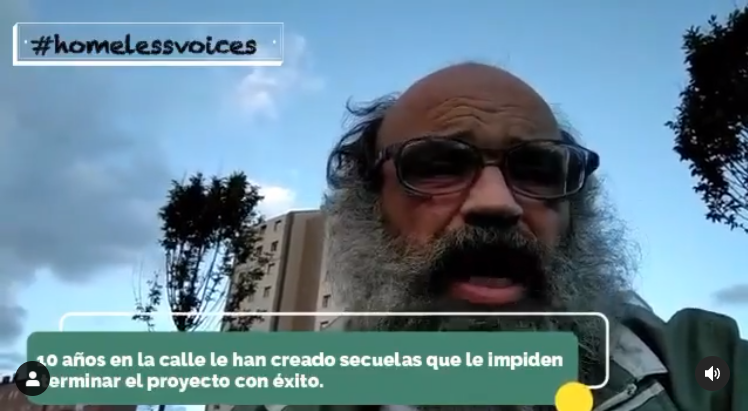
#HomelessVoices Juan busca ayuda literaria para acabar su libro. ¿Le ayudas? #escritores #sinhogar #autores #libros #coach #HomelessEntrepreneur


#HomelessVoices
Juan busca ayuda literaria para acabar su libro. ¿Le ayudas?
#escritores #sinhogar #autores #libros #coach #HomelessEntrepreneur

July

Thanks to an invitation to participate by Volt Europa, Homeless Entrepreneur was able to explain our programs in front of the European Parliament’s PETI commission.

“I'm thankful to have had the opportunity to present #HomelessEntrepreneur’s programs and social policy recommendations in front of the European Parliament’s PETI commission.” Andrew Funk, President of Homeless Entrepreneur

August

Thanks to Nuria Pendas, the Homeless Entrepreneurs have been given the opportunity to tell their stories in the HE profiles series. These videos have been included in their personal page to provide greater value and transparency to their experience.

Estrenamos una serie de entrevistas de #PerfilesHE gracias a @nuricoco!

Estrenamos una serie de entrevistas de #PerfilesHE gracias a @nuricoco!

September

Homeless Entrepreneurs keep advancing thanks to their focus! 5 people in the program have gotten jobs during COVID and Edson can be seen training for a certificate, so he can clean tall buildings.

Orgulloso de Edson, un #HomelessEntrepreneur, realizando un curso de 100 horas que se llama “técnico de trabajos en altura y plataformas elevadoras móviles” para salir de su situación sin hogar gracias al trabajo y la ciudadanía activa! #alturas…

Orgulloso de Edson, un #HomelessEntrepreneur, realizando un curso de 100 horas que se llama “técnico de trabajos en altura y plataformas elevadoras móviles” para salir de su situación sin hogar gracias al trabajo y la ciudadanía activa!
#alturas #Barcelona

October

As stage 1 of our Homeless Hostels Work program, which was focused on solidarity finished, we entered stage 2, which is defined by sustainability. We were invited to share our experience of turning a liability in the tourism sector into an asset for addressing homelessness by the Union for the Mediterranean.

UFM October.jpg

November

Our community keeps growing and the bonds between the Homeless Entrepreneurs and our volunteers become stronger. We are grateful to have more than 250 volunteers from around the world supporting our programs.

Bob started teaching his first English student to improve her conversation skills and speed up the process of ending his state of homelessness via work and active citizenship!  ✅Contact us if you’d like to have conversation classes, too!  #HomelessE…

Bob started teaching his first English student to improve her conversation skills and speed up the process of ending his state of homelessness via work and active citizenship!

✅Contact us if you’d like to have conversation classes, too!

#HomelessEntrepreneur #EnglishClass #Conversation #Barcelona #homelessness

December

Our relationship with amazing partners like Coca-Cola and IBM strengthen as we grow and our 2021 solidarity calendar starts getting sold to our amazing community.

Get your own 2021 Solidarity Calender!
A special thanks to @cocacolaep_es for ordering 50 of our 2021 solidarity calendars for their employees to speed up the process of ending homelessness in Spain thanks to work and active citizenship! Every calendar has a special surprise, which shows…

A special thanks to @cocacolaep_es for ordering 50 of our 2021 solidarity calendars for their employees to speed up the process of ending homelessness in Spain thanks to work and active citizenship!
Every calendar has a special surprise, which shows our gratitude to each and every employee in #CocaCola, who make it such a wonderful company!
#HomelessEntrepreneur #socialimpact

Summary

Thanks to everyone who has been involved, we've currently helped create sustainable work and dignified housing for and with 20 #HomelessEntrepreneurs and hope to end homelessness for 100 people in our program in 2021.

Special Thanks to our Partners

We’d like to thank all of our partners, who have placed their trust and support in our work because it wouldn’t be possible without them!

We need your support for 2021

If you appreciate our work and would like to help support us, please do. A donation that comes from your heart, which is coherent with your interest and possibilities is the difference between more or less homeless people becoming active citizens again.

Donate today and end homelessness for a #HomelessEntrepreneur in 2021.

A huge hug,

Andrew Funk

President of Homeless Entrepreneur