The Human Trait of Mobility

By Barbara Fluegge on behalf of Mobility Moves Minds – build and grow again

The Claim of Mobility

When it comes to mobility, we all again and again experience now what it means to be mobile, not mobile, resilient, withstanding in all 3 dimensions: physical, digital and mental mobility.

The threat that Ukrainian people are facing is a brutal slam in the face of children, women, men, anyone, them, their families, friends, businesses, projects, houses, gardens, homes they built and maintained, communities they nurtured, believes they expressed, ideas and greatness they contributed to the world  ...

Learn about Ukraine HELP program

Your mobility, our mobility is stressed - we cannot put it in better words 

Physically: facing the burden that is put on the people in Ukraine and everywhere else where you are not allowed to move freely, yet forced to leave, forced to move under the utmost dangerous circumstances

Digitally: do you experience the digital mobility freedom - we see what fake news, troll factories are aiming for - we also see and experience that many support centers have been located in Ukraine and that colleagues and the teams of our business partners experience the immobility of digital accessibility and have to give up their digital business and digital homebase

Mentally: this is heart aching and heart breaking, eating up your nerves and putting so much stress on your shoulders, minds, and hearts - how to cope with the uncertainty, with the danger of moving, with the danger of expressing fear, unbelievable thoughts and concerns and worries about family members, friends, and the ones that aim to help and put themselves into the danger zones…

Yet this is the moment of being faithful and hopeful.

Donate & Support Mobility for Good

The Claim of Hope

Let me reflect on what we covered in Mobility Moves Minds about HOPE.

Hope is the willpower and the waypower people have toward a goal […] and when necessary, redirecting paths to goals in order to succeed.
— Luthans, F., Vogelgesang, G., & Lester, P. :
  • Willpower: having positive expectancies and specific goals

  • Waypower: having in place alternative pathways to cope with those expectancies not proceeding in the way they were supposed to proceed

The willpower and the waypower, this is how the psychologists Luthans, F., Vogelgesang, G., & Lester, P. described it in their article, issued in 2006 about Developing the Psychological Capital of Resiliency. published in the Management Department Faculty Publications. P. 8, Nebraska.

And yet in these times, we release the so called CURIOSITY Edition of Mobility Moves Minds. You find the Curiosity Chapter added in the excerpt for free download below.

Our grandparents and parents and the generations before taught us what it means to stand up again, fight, continue and stand up again.

Let me reflect on Curiosity and what Rafael Recort Badia, a homeless entrepreneur we talked to in the making of our book, stated in our interview. Rafael says about Curiosity being a human trait:

To live out human curiosity is what makes us human.
— Rafael Recort Badia, Part A.14, The Only Sky

And we continue in our elaboration of resilience and fighting the worst moves that can happen to us, that happen to you right now - fighting by acting:

We create opportunities for ourselves in the midst of life. We use our energy and curiosity as best as we can.
— see Part B.1 Transformational Lines

We hereby share with you the unique Curiosity Edition of Mobility Moves Minds

  • exploring curiosity.

  • helping each other in standing up against the darkness of giving in and worrying so much

  • identifying chances - even we cannot think of right now

Supporting Others to Build The Trait of Mobility

The Curiosity Edition right now is available in English - we are working on the German edition - it is available as eBook in PDF Format

>> we donate part of the purchase revenue to #HomelessEntrepreneur - as homelessness is a fight we are up against every day

>> #HomelessEntrepreneur is helping in Europe and elsewhere anyone who faces the loss of the home - we are proud to be the social corporate partner of Andrew Funk's organization and his efforts 

>> the eBook costs 7.99 € - for orders you find attached the QR code page and direct access

>> purchase directly here

Any purchase will help and give back. 

>> we will report on the purchase results as it is our good manner - we issue the donation on a monthly basis to #HomelessEntrepreneur with our donation statement - as we did for the Christmas season and in the months before. 

Your purchase will help Homeless Entrepreneur provide greater Mobility for Good to end homelessness through their programs..

Thank you

Dr. Barbara Flügge

Founder, Chief Resilience & Services Officer -digital value creators (DVC)


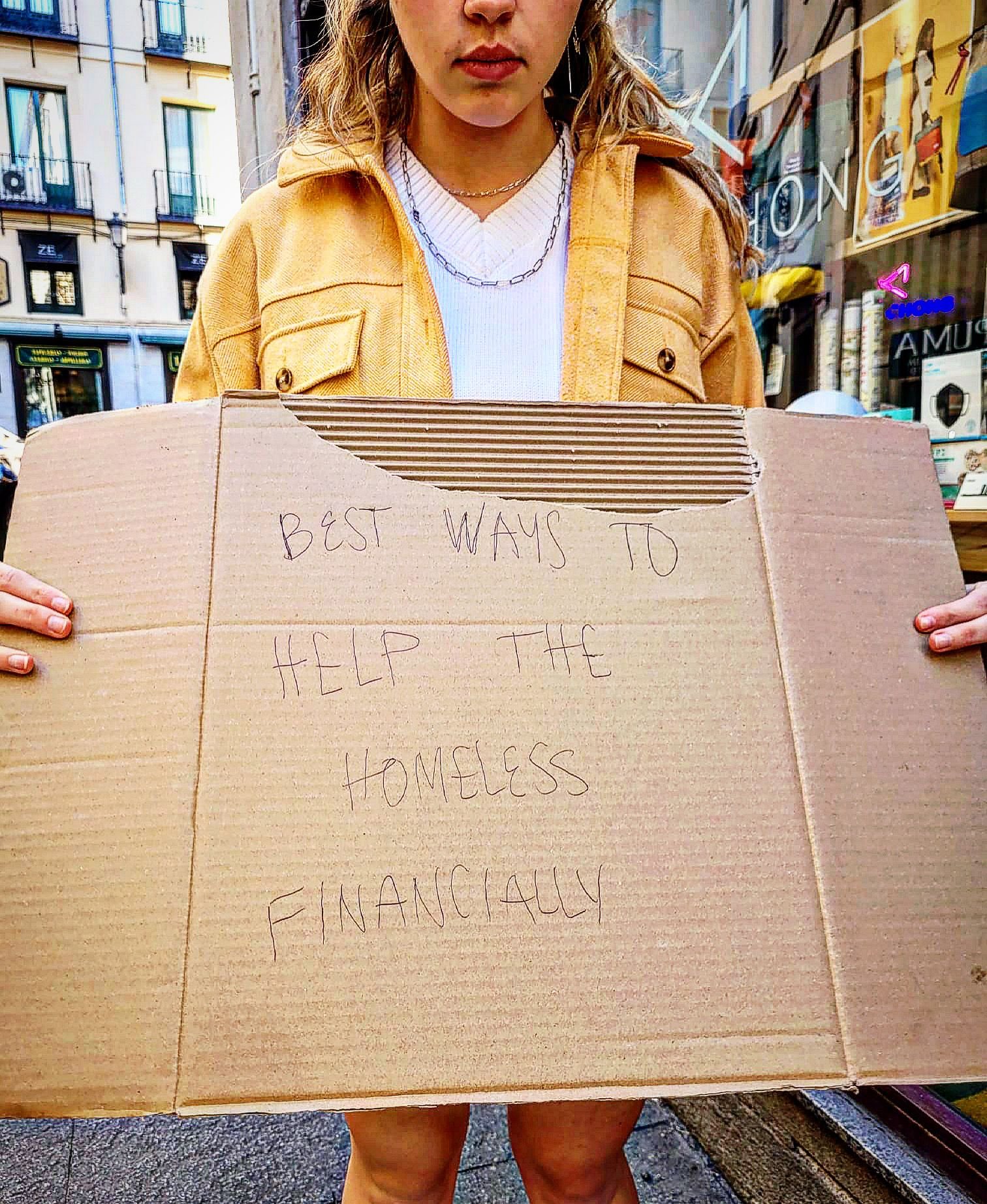
Best Ways to Help the Homeless Financially

We have all had the experience of walking around a city and seeing people struggling with homelessness. Our initial reaction may be one of discomfort because seeing someone struggling with homelessness is hard for most people. A lot of people want to help, but there are so many spoken and unspoken rules when it comes to helping social causes. There is not a one size fits all to helping people, especially with a cause so complex and worldwide like homelessness.

In recent years the amount of people without homes has increased, with more than 10,000 more people in California experiencing homelessness from 2019 to 2020, and the numbers worldwide reflect them. This is a worldwide issue with different socioeconomic causes that can vary depending on the region they originated in. The US Department of Housing and Urban Development estimates that it costs about $40,000 a year for a homeless person to live on the streets. The BKRHC estimated that for 2016 to 2017, the total combined budget for services locally was around $25 million. This came out to about $5,551 per person.

Please answer this survey question to help us improve the financial health of people experiencing homelessness. Thanks!

There are quantifiable measures and goals set out to hit, but what can we do to hit them? I spoke to one of the team members at Homeless Entrepreneur, Mayte Miro, and she had some recommendations.

It is important to remember that governments and people have the same goal: to end homelessness. Their intentions are there, but the methods may vary.
— Mayte Miró, Quality Manager at Homeless Entrepreneur
Donate & Support our Finance Department

When it comes to what the average person can do to help, your money and time donations can really impact these people who are struggling with homelessness. When asking another professional working in the homeless nonprofit sphere, Lana Dalton, the Homeless Programs Division Manager at City of Aurora, she said something similar. When donating whether that be time, money, or physical items, it is best to go through a reputable nonprofit.

Direct financial donations to individuals who are unhoused are not preferred.
— Lana Dalton, Homeless Programs Division Manager at City of Aurora (Colorado)

Noting this consensus, that donation to a nonprofit is ideal when wanting to help the unhoused, the next question is what kind of nonprofit should I donate to? I think a good rule of thumb is chosing a nonprofit that is transparent about their use of donations. The nonprofit you donate to should align their mission and its business endeavors. When asking Sergi, who works at BBVA in Madrid, he commented on exactly this.

While a nonprofit needs to focus on to be sustainable, transparency of use of funds is key.
— Sergi, Financial Specialist at BBVA

To do the most help, you are best off donating whatever resources you have available to a reputable, transparent nonprofit. Donating to a nonprofit usually ensures that your dollar will go further and help those who need it.

Housing Help

Housing help usually consists of shelters, drop-in centers, or transitional housing. Shelters provide just that, shelter; they offer you a place to rest your head for the night, but don’t traditionally offer necessary supplies. Drop-in centers kind of do the opposite of a shelter and offer supplies but not a place to stay overnight. Transitional housing is a more involved approach to helping people get back on their feet, it tends to offer a place to stay, and resources to help get you out of homelessness. Although transitional housing is a broader term, and the specifics of the housing can vary greatly.

At Homeless Entrepreneur, we have our Launchpad Housing Program which houses homeless people and gives them resources to focus on ending their state of homelessness. This program utilizes local hostels to house people experiencing homelessness, it partners with local businesses to identify those who may need help, and it prioritizes partnering with local NGOs and government to create the most opportunities for the unhoused.


Other Homeless Support Services

This is the broadest area of help, and some churches, public charities, NGOs operate in this sphere. This might consist of clothing drives, job networks, and affordable clinics depending on the source. These are community specific and vary greatly depending on the needs of the community.

Here at Homeless Entrepreneur our solution to help people experiencing is a more holistic approach.

  1. Our Homeless Helpline collects real-time data from and about homeless people or those about to become homeless and connects them to available resources, and aims to prevent and reduce homelessness.

  2. Homeless Voices provides insight into the lives of homeless individuals to connect them with their community along with housing and employment opportunities, so they can grow their income and build their assets.

  3. Our Help Program provides a support pathway to independence through incentivizing employment opportunities and fostering entrepreneurial activities. It is a holistic one-year program that targets poverty, works in conjunction with the Homeless Hostels Work program or already existing housing programs in order to create sustainable change via active citizenship, community and life purpose.

Connect with the author, Anna Mayer, via LinkedIn!


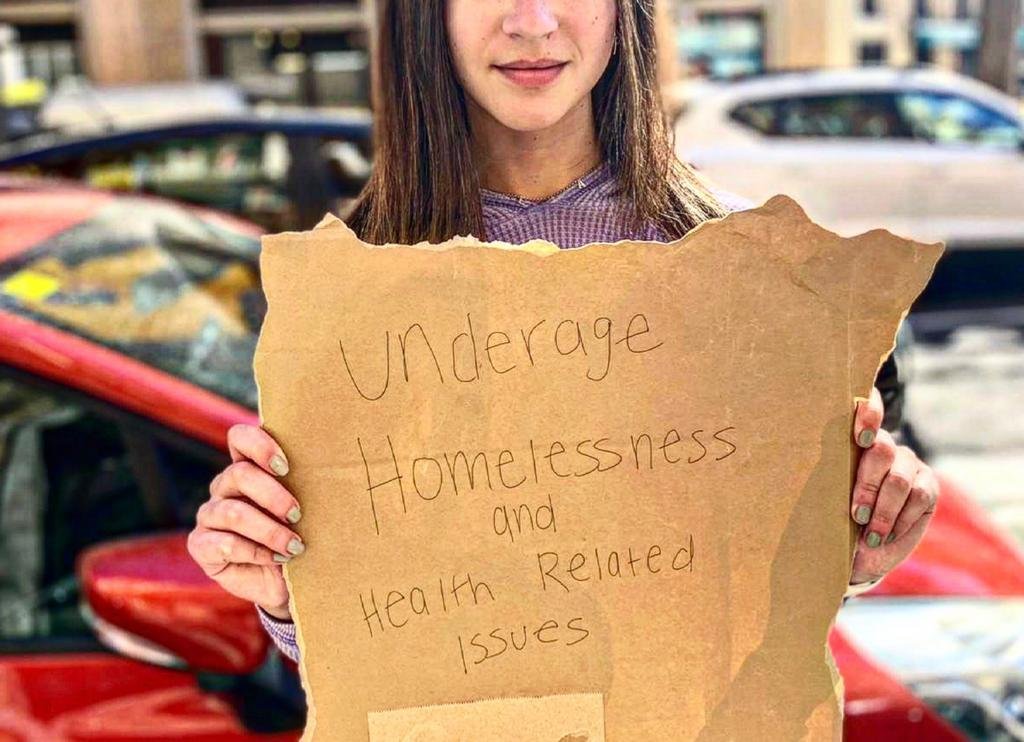
Underage Homelessness and Health Related Issues

Written by Julia Marvy

Homelessness is a global problem and affects people in every country. There are far too many people living in poverty, an estimated 154 million in the world, according to Habitat for Humanity. Of that homeless population, about forty percent of those people are under the age of eighteen. Living on the streets and not having a stable income makes it very difficult for these individuals to receive health care that is necessary. Among those living in poverty there are a variety of health related concerns, ranging from physical, mental, and emotional. Health care access is hard to come by for the homeless population due to a lack of availability of resources. The homeless population does not have a stable income, therefore making it impossible for them to afford health care without assistance, and there is not much assistance readily available.

An underage person experiencing homelessness fell in a hole and couldn’t get out. A businessman went by. The underaged homeless person called out for help. The businessman threw him some money and told him to buy a ladder, but the underaged homeless person could not find a ladder in the hole he was in. A doctor walked by. The underaged homeless person said, ‘Help, I can’t get out.’ The doctor gave him some drugs and said, ‘Take this, it will relieve the pain.’ The underaged homeless person said thanks, but when the pills ran out, he was still in the hole. A renowned psychiatrist rode by and heard the underaged homeless person’s cry for help. She stopped and said, ‘How did you get in there? Tell me about yourself, it will alleviate your sense of loneliness.’ So the underaged homeless person talked with her for an hour, then the psychiatrist had to leave, but she said he’d be back next week. The underaged homeless person thanked her, but was still in his hole. A priest came by and heard the underaged homeless person calling for help. The priest gave him a Bible and said, ‘I’ll pray for you.’ The priest got down on his knees and prayed for the underaged homeless person, then left. The underaged homeless person was very grateful and he read the whole Bible, but he was still stuck in that hole. A Homeless Entrepreneur happened to be passing by. The underaged homeless person cried out, ‘Hey, help me, I’m stuck in this hole!’ Right away, the Homeless Entrepreneur jumped into the hole with him. The underaged homeless person said, ‘What are you doing? Now we’re both stuck in here.’ The Homeless Entrepreneur responded, ‘It’s ok, I’ve been here before and know the way out.
— Inspired by an anonymous person

Homeless Entrepreneur is an organization in various parts of the world that works with homeless people who want to get back on their feet and have their eyes set on succeeding. The overarching goal of Homeless Entrepreneur is to work towards ending homelessness and poverty, while developing success and bettering the lives of those living in poverty. Within this organization, there are different branches to address several issues regarding homelessness and finding ways to help the Homeless Entrepreneurs (HEs) succeed in their goals. This organization helps get the HEs employment opportunities and provides them with housing and support. Homeless Entrepreneur really wants to reduce homelessness and does what it takes to help each individual that joins the program. Regardless of age, gender, race, ethnicity, etc, this organization is open to helping anybody who is willing and able to participate in its program. Not only does the organization help HEs get employment opportunities, they also help them to grow their community and networks in various areas of life. For example, there is a health department that works to determine what is needed to reduce homelessness in terms of health. Those living in poverty do not have the same access to health care and therefore have more health related problems. The health department of Homeless Entrepreneur works to gain health care resources to help improve the overall quality of life and well being of the entrepreneurs.  

Donate & Support Health Department

Regarding homelessness among the youth population, there is not much known in comparison to the overarching term homelessness. Living without a home is extremely detrimental to the health and wellness of adolescents. There are several health related concerns for the homeless youth population, but health care workers are limited in their capabilities to help these individuals. Many homeless youth do not seek out health care when they need it due to the fear of being judged. There are beliefs among the homeless youth that healthcare professionals have negative attitudes toward the homeless, which insinuates fear and not seeking the help when it is needed. Health care workers need to become more aware of this and try to provide the resources they are able to in a more open manner. There is a misconception around the world that homeless teenagers are on the street by choice. That is not the case; many youths are on the streets for several different reasons. Sexual abuse, violence, refugees, and unstable living environments are just a few of the possible causes of youth homelessness. 

The well-being of homeless youth is considerably worse than those who are not homeless. They have a greater chance of more severe and damaging mental health problems. Depression, anxiety, and post traumatic stress disorder are very common among the homeless youth and these individuals have a greater chance of developing these disorders more severely compared to their peers. Nearly half of the homeless youth population has been diagnosed with a mood disorder when they are able to seek medical care. Mental health is very important in terms of living a healthy lifestyle, and without the proper care, many other problems could arise. Millions of people have a mental illness, but not all of those people are able to get the necessary help. Those living in social exclusion do not necessarily have the ability to get proper treatment for their mental health, and that alone is extremely detrimental. It is very common for adolescents to have a mental health disorder, and without the proper care bigger and more severe problems will occur. The homeless youth need the resources for their mental health in order to attempt any sort of healthy lifestyle.  

Please tell us a story about a challenge you’ve faced due to mental health issues and how you overcame it, so we can learn more about possible solutions to help people experiencing homelessness in our programs.

In a more physical health outlook, homeless youth have an increased rate of acute and chronic respiratory problems. Many homeless youth also find themselves having sex with several people in order to make money. The term “survival sex” is used and it essentially refers to homeless youth selling themselves for sex as a way to help them survive. These behaviors often lead to the development of sexually transmitted diseases, the most common being HIV. Due to their lack of healthcare access, these STDs may not be discovered or treated properly, which can ultimately lead to more health issues. Another point is elevated drug use among the homeless youth population. Drug use can lead to several other health issues. Homeless youth are more prone to drug use. 

In conversation with a 21 year old female college student attending Miami University in Oxford, OH, Lexi opened up regarding her struggles with mental health. She talked about constant feelings of distress, panic attacks, and too much worrying. These feelings started to affect all aspects of her life. She never wanted to leave her room because she was too worried that she would have a panic attack or something would trigger her. These feelings affected her relationships with friends and family, her drive to succeed in school, her motivation to exercise, and it led to a decreased appetite. After coming to terms with how severe her feelings truly were, Lexi spoke with her parents and was able to connect with a therapist.

Since starting therapy, Lexi highlights that she feels more confident and mentioned that she no longer feels a weight on her back. She feels more free and comfortable in her own skin to go out and do what she normally does. She also was able to connect with a psychiatrist, who diagnosed her with generalized anxiety disorder and prescribed her medication. Lexi is someone who is incredibly fortunate to have the ability and resources to seek out the help she needs.
— Lexi, 21 year old Miami University student

She knew she was struggling, and it really was impacting every part of her life, so she was able to get the help and treatments she needed. The youth that are living in social exclusion do not have it this easy. They have to deal with these same feelings that Lexi felt every single day, but do not get to talk to a therapist about them or take medication to help tame them. Lexi noted that her mental health is very important and having those off feelings did not allow her to feel healthy. Since getting help and medication, Lexi feels that she is back on track and on her way back to a fully healthy lifestyle. The homeless youth deserve the same resources as Lexi and the millions of other people that struggle with mental health, but due to their circumstances they do not have these resources. Mental health struggles do not amount to a healthy lifestyle, and every person, regardless of any other factors, deserves a healthy lifestyle and the proper care when needed.  

Learn more about Hoshang's Program

Those living in social exclusion who need access to health care are unable to get it in some instances. Hoshang, a Homeless Entrepreneur, spoke on behalf of a young boy regarding access to health care. There is a young boy, Antonio, who is almost seven years old living in social exclusion. He needs a health card in order to receive health care in Spain, however without a passport and money, he is unable to do so. If an emergency happens, he would not be able to receive the care he needs, due to the fact that he does not have the ability to get a new health card. Without health care, Antonio as well as so many others will suffer tremendously. Without having this health card, people feel helpless and uneasy on where to go and what to do. No one should have to suffer through physical or mental health problems, especially such a young boy. 

Arantxa Ruiz Ponce is part of the organization Feliz No Cumpleaños, which helps adolescents living in social exclusion. She spoke about her mental health and how important it is to have stability when it comes to mental health. She talked about being very familiar with depression and anxiety, which are the two most common mental health illnesses. She said that with therapy and treatment, she was able to overcome her struggles. The help of psychologists and private practice helped her get back on her feet. Without the ability to get help, these problems could have worsened significantly. There are so many adolescents living in social exclusion that are dealing with these exact problems, yet do not have the resources to get help from a psychologist or private practice. 

Connect with the author, Julia Marvy, via LinkedIn!


References

Haldenby, A. M., Berman, H., & Forchuk, C. (2007). Homelessness and health in adolescents.
Qual Health Res, 17(1232). https://doi.org/10.1177/1049732307307550 

Perlman, S., Willard, J., Herbers, J. E., Cutuli, J. J., & Garg Eyrich, K. M. (2014). Youth
homelessness: Prevalence and mental health correlates. UChicago Journals, 361-374.
https://www.journals.uchicago.edu/doi/pdf/10.1086/677757