The Effects of Homeless Shelters Overprotecting Residents

Written by Avery Berlin

A recent study published in Catalan News found that in the last 13 years, the number of people sleeping on the streets has increased by 62%. Figures that estimate homeless people do not only include those who are sleeping on the streets, but also include people staying in public and private shelters, hostels, temporary housing, and more. The Homeless Care Network (XAPSLL) estimates that almost 3,000 people sleep in public and private shelters, while almost 900 find shelter in informal housing (Nearly half of the homeless people in Barcelona have lived on streets for over two years, 2022).

Get more insight on homelessness

Homeless shelters around the world have provided a safe haven for people living on the streets. In addition to shelter, these facilities often provide food, clothing, amongst other resources. These needs are essential for survival, however, homeless shelters can overprotect residents and prevent them from reaching their fullest potential. “2015 Diagnosis,” a document detailing the situation of homelessness in Barcelona describes homeless shelters as “a first step.” They explain how homeless shelters can create a “revolving door effect,” meaning that homeless populations are often not receiving the attention they need at a specific facility, so they might move to another facility, beginning the entire cycle again of finding a shelter and receiving services (Marco et. al, 2015).

Salvation Army of St. Petersburg Emergency Shelter in St. Petersburg, FL

In addition to this “revolving door effect,” there are many drawbacks of homeless shelters. In a discussion with Nikki, founder of Lux and Black, a London-based clothing line of ethically sourced clothing, she explained the advantages and disadvantages of homeless shelters. 

The system to help [the homeless population] is not reflective of their needs, nor does it help the homeless efficiently or effectively enough to go back into the world of work and be more productive members of society.
— Nikki, founder of Lux and Black

She also mentioned that despite the shelters providing basic necessities, many problems still remain. Men and women are often in separate areas while sleeping, yet this might also separate couples and families. Despite drugs and alcohol being banned from the facilities, people still find ways to sneak them in, which can create an unsafe environment for other residents. On the same note of an unsafe environment, theft of possessions often takes place while residents are sleeping, further creating problems for residents who already have so few possessions that cannot easily be replaced.

The intricacies and luxuries we take for granted like being able to go online, have a laptop, and help of our friends and family, they don’t have, so it’s incredibly hard to get out of this cycle. They need so much in order to be able to apply for and be successful in a job application, but there isn’t easy access to this at all. This part of the process is very flawed and pretty much only allows them to work cash in hand jobs, which isn’t sustainable. They need an address to be able to put on their job applications so they can apply for more permanent work.
— Nikki, founder of Lux and Black

Clinton Amam, writer and Homeless Entrepreneur in Nigeria

Despite all of the above problems, Writer and Homeless Entrepreneur Clinton Amam defined a list of the positives of homeless shelters. First, shelters can provide a place for like minded creatives and skilled people to meet each other. In addition, he described how this community can be a newfound family to make you feel at home that can also reduce depression as the homeless now have people to talk to, play, and interact with. However, despite these advantages, he explained how homeless people in shelters were prone to bullying, fighting, possible disease outbreaks, and harsh rules that might not be in your favor. In Clinton’s opinion, homeless shelters do not provide the support or help with plans for their residents to leave their current state or place.

With determination, skills, space, and support, there is a possibility or even high chance that they can get back on their feet as active and working citizens.
— Clinton Amam, Writer and Homeless Entrepreneur
Learn more about Clinton's HELP Program

Homeless Entrepreneur’s mission is to promote economic empowerment and poverty reduction via work and active citizenship. Homeless shelters, on the other hand, provide a sense of temporality and lack the resources that the homeless population needs to be able to break the cycle in order to become motivated, active, and participative citizens. Homeless Entrepreneur offers extensive resources to assist homeless people in getting out of their situations and transforming them into active members of society. In specific, the Launchpad Housing Program “is designed to turn a liability in the housing sector into an asset for addressing homelessness.”

Donate & Support

The Launchpad Housing Program creates opportunities for local organizations such as governing bodies, NGOs, and hotels to create social impact by identifying homeless people and relevant opportunities for both parties. During the pandemic, Homeless Entrepreneur created the #HomelessHostelsWork program, encouraging local accommodations and businesses to turn their liability into an asset for the homeless population, allowing both the businesses and homeless people to benefit from the partnership. The Launchpad Housing Program also encourages local NGOs and governing bodies to be more creative and leverage their current resources to develop social impact and opportunities for the homeless population.


Despite the ability for homeless shelters to provide resources to people in need, these shelters must be temporary solutions to help the long term goal of ending homelessness. Homeless shelters often do not identify talent or the goals of individuals, creating a constant cycle of temporary resources that do not contribute to the end goal. Homeless Entrepreneur has developed resources to push these individuals to reach their fullest potential, which likely cannot occur solely with the help of homeless shelters.

Donate & Support our Launchpad Housing Program

Connect with the author, Avery Berlin, via LinkedIn!


Mental Health Matters

Written by Julia Marvy

The conversation of mental health has been on the rise in recent years. More people are being consumed by mental illness and the stigma behind it has changed. Struggling mentally can have serious detrimental effects on any type of person. The effects of mental illness can affect people both short term and long term, and in every aspect of life. The emergence of mental health resources has increased as of late, however there is still a need for more. People of all ages can struggle with mental illness and the degree of severity can vary based on various factors. Struggling with mental illness needs to continue to become more normalized, as it is only on the rise. People from all different backgrounds, races, ethnicities, religions, genders, socioeconomic statuses struggle with mental health and it is important for all to be aware and cognisant of mental struggles. 

Mental health definitely falls into the overarching category of health. Homeless Entrepreneur works to help empower individuals living in social exclusion to get back on their feet and be on the right path to success and works to help these individuals in all aspects of life, one being health. Its health department aims to ensure a healthy lifestyle for all those living in social exclusion who have the drive and motivation to succeed in life. Health is a very broad term and a lot of issues fall into this category i.e. mental health. Any type of person can struggle with mental illness, but living in social exclusion can be a huge factor in one’s mental health. By promoting mental wellbeing and a healthy lifestyle, the health department at Homeless Entrepreneur can truly make a difference for the health of those living in social exclusion who want another chance at success. 

Donate & Improve mental health with us!

Serious mental health issues are higher among those who are homeless than those who are housed.

In England, it was reported that mental health issues were twenty five to thirty percent more serious among homeless people than those that had stable housing. Homelessness can also be associated with greater rates of personality disorders, which tie into mental disorders. Homelessness can be the origin of mental health problems and a result of mental health problems.
— (Perry, 2015)

Mental health can truly affect anyone, but having to deal with it while also dealing with the other struggles of homelessness can truly be life changing and life threatening. Having to struggle with mental illness while also struggling with stable housing are two very big things to have to deal with and work through. There has been lots of discussion in terms of how to provide primary health care for mental health to the homeless population. The way that this healthcare should be distributed is a debate. A Canadian study found that primary healthcare services that specifically went to homeless shelters or other forms of housing for homeless people were more effective and convenient for those individuals. When it came to homeless people having the option to go to an office to see a doctor it was less effective because many did not have the drive or motivation to actually go somewhere. When a health professional came to them it was far more convenient to receive care. There are also several outreach programs that are set up to work with homeless individuals for a longer period of time to assist with mental health services and getting back on their feet in other parts of life. All in all, homeless people are at a larger risk of mental illness, however more often than not these are treatable illnesses. They are just less likely to use mental health services, which makes their illness prolonged and more severe. The different outreach groups try to bring services to the homeless people so it is convenient for them and so that the number of homeless people struggling with mental illness can be reduced (Perry, 2015). 

Contact Us & Become a Health Partner

There is still a lot to be learned about homelessness and mental illness. There is a lot of debate about what factors truly affect homelessness and mental health. There are many factors that influence the wellbeing of those living with housing insecurity. The influences of mental health states are more severe for the homeless population, however several other factors play into the mental health state of the homeless. Substance abuse and criminal activity are two large factors and both impact the association between homelessness and mental health. Those living in poverty are at a greater risk for mental health problems, however several other factors are involved, such as substance abuse (Fox, 2016). There is still a lot to be learned about homeless and its relationship to mental illness, however it is important to note that those living in social exclusion do face greater risks of mental illness and less access to mental health services. 

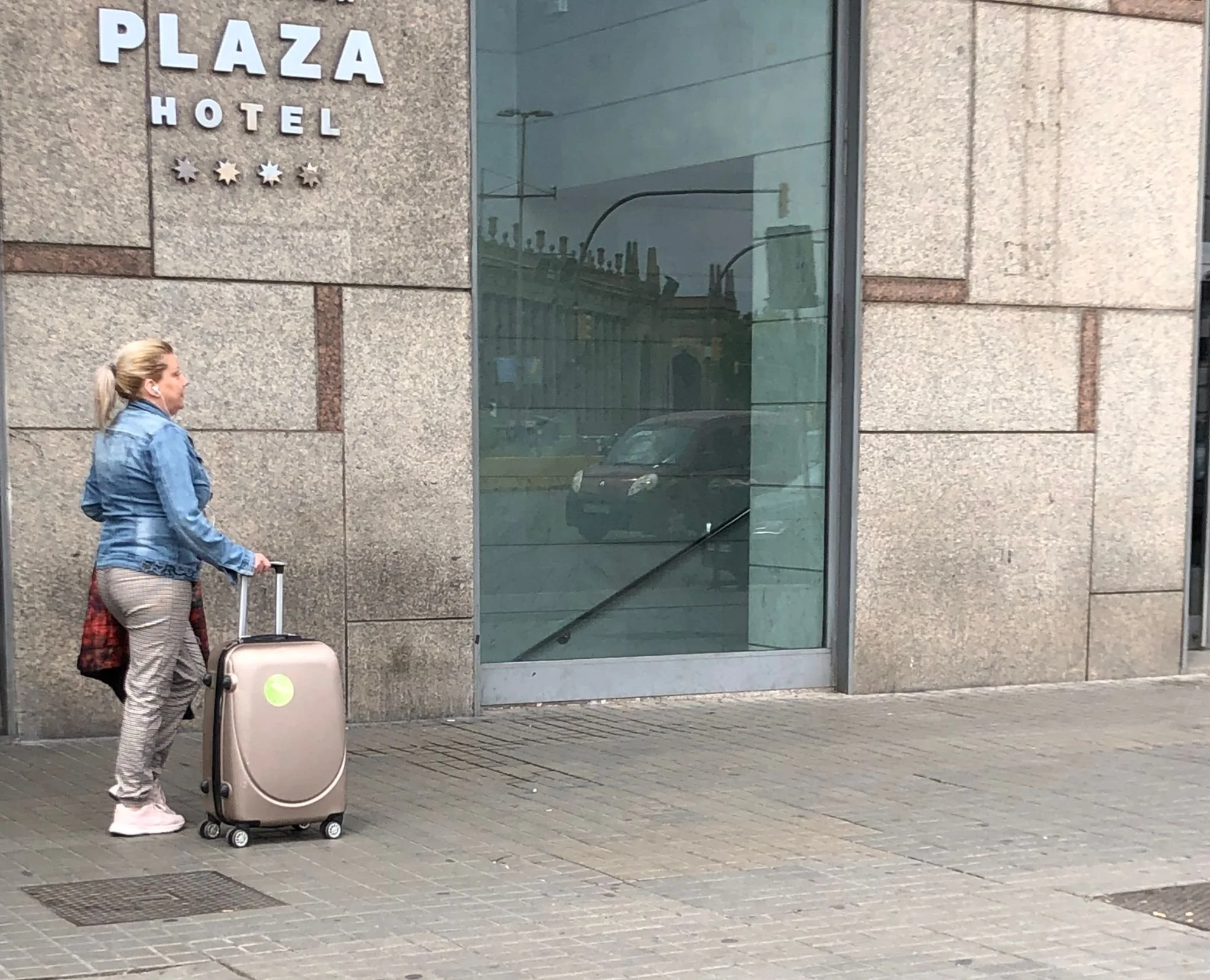
A common misconception is that mental health issues and homelessness are easy to detect. For example, a member of Homeless Entrepreneur was verbally attacked by the woman in this picture for no reason other than mental health issues. From a distance, an observer would just think she’s a random tourism when the reality is far from that. She’s a person experiencing homelessness living out of her briefcase fighting with the extremely difficult challenge of maintaining her mental health against all odds.

Mental health is a very important concept and it needs to be recognized. It can be a very serious thing for people from any background. According to the World Health Organization, one in four people will be affected by mental illness at some point in their life. Currently, 450 million people suffer with mental illness and these people come from a variety of different backgrounds. People of all ages can suffer and the need for mental health services is ever growing. 

In talking with several college juniors, many expressed their own struggles with mental health. Many shared that mental health services are incredibly important for them and their ability to cope. Mental illness affects so many different parts of life and having it under control is incredibly important. Several college students shared how their mental health significantly impacts their academics because if they are not in the best head space, they cannot complete school work to the best of their ability.

Social life, work, and relationships with friends and family are all affected by mental health, and when mental health is off, everything else is.
— Anonymous College Student

These students shared that it is very hard to focus on other important parts of their lives when their mental well being is not at its best. Everyone deserves access to mental health services because poor mental health affects all areas of life. 

I asked one of the Homeless Entrepreneurs, Juan Jo, why mental health is important to him.

When mental health fails, it is hard to make decisions.
— Juan José, street sweeper and Homeless Entrepreneur

He talked about depression and said that a person’s thoughts are not always accurate and oftentimes are distorted. In terms of mental health resources in Spain, he talked about the lack of resources. People are given short therapy sessions once every two or three months, which is not helpful for anyone. He said, “because of the lack of efficacy of treatments for at least twenty years, economic crisis and the pandemic, many people have struggled but the system has failed and has become even more corrupt.” In terms of how the system sees the way to fix mental illness Juan said, “it is thought that by giving employment and money in order to obtain material goods, the patient improves. But giving work and money to a mind that is struggling without illusions and that does not know how to enjoy it is not entirely the solution. It is part of it, but what is essential is that the patient be able to understand their illness and the best ways to treat it.” He went on to say that “it is important to find calm and effective solutions to know how to deal with the effects of your illness in the best way at the right time.” Mental health is something that a lot of people struggle with and it is important for more people to recognize that so people can be treated. Mental health impacts a lot of different parts of life and if it is not treated, it is hard for people to excel in other areas of life. 

Donate & Support Juan Jo’s Help Program

Connect with the author, Julia Marvy, via LinkedIn!


References

Fox, A. M., Mulvey, P., Katz, C. M., & Shafer, M. S. (2016). Untangling the relationship
between mental health and homelessness among a sample of arrestees. Crime &
Delinquency
, 62(5), 592-613.

Perry, J., & Craig, T. K. (2015). Homelessness and mental health. Trends in Urology & Men's
Health
, 6(2), 19-21.

Conversations with a Homeless Entrepreneur: Larry Adesuyi

Written by Jillian Salaway

According to the Spanish National Statistical Institute, there has been a nearly 5% increase in the number of homeless people in the country of Spain from 2005 to 2012. This increase has only sharpened with the disastrous consequences of the pandemic, impacting the lives of all people for the last two years. Despite providing more public assistance than most other countries and offering a seemingly strong safety net for the financially unstable, the question that begs to be asked is, why is the number of homeless people in Spain still growing?

To better understand this question, I spoke to a social policy consultant and economist based in Barcelona, Pablo Tucat. In our conversation, Tucat provided insight to the potential causation of the homelessness increase in Spain. In our conversation, he began by citing that the first National Strategy for Homeless People was approved and implemented by the Spanish government in 2015. This program allocates state funds to various social services that address homelessness, but has experienced a series of faults in its execution. The obvious fault is the growing numbers of homeless persons despite the development of this program, but Tucat gives light to the underlying source of this issue: 

The degree of implementation of this strategy barely reaches 38%. In part, this is explained by the lack of a specific budget allocation. . . In 2020, the Institute for the Evaluation of Public Policies, dependent on the Ministry of Finance and Public Administration, published a fairly critical report on the National Strategy. One of the most notable points from my point of view is the lack of monitoring and evaluation mechanisms. This is essential to implement corrective measures and implement better policies.
— Pablo Tucat, Researcher at KSNET

In essense, Tucat emphasizes the downfalls of an ill-equipped system that failed to work out the technicalities necessary for effective implementation. However, these shortcomings can be alleviated, as noted by Tucat in our conversation. If the state is able to allocate resources to the correct services, such as in the residential sector, then it is likely that the number of homeless persons will begin to decline.

Donate & Improve Social Policies!

For an empirical understanding of the growing number of homelessness in Spain, I spoke to one of our own Homeless Entrepreneurs Larry Adesuyi of his own experiences with housing insecurity. Larry is originally from Nigeria and began his college education there, but received his degree in Business Administration and Marketing in Barcelona. Larry decided to move here for a better life than what he had in his home country, but has faced some hardships since moving to Spain five years prior. Larry just received a job working in a call center for a research company since joining our HELP line program, but aspires to be his own boss one day. He hopes to open up a shop in Barcelona selling African fabric in the near future, but his big dream is to open up his own culturally immersive Nigerian restaurant to pursue his love for cooking and to create a more culturally diverse environment in the city. During our interview, I asked him a series of questions about his experience with the assistance provided to those facing housing insecurity from the state, as well as the opportunities offered to him since joining Homeless Entrepreneur’s HELP line program.

Jillian: “From 2005-2012, there has been a nearly 5% increase in the number of homeless people present in Spain, with the number continuing to grow since the pandemic began. Why do you think there has been an increase?”

Larry: “I wouldn’t be able to say exactly why, but from my experiences living here, especially among non-Europeans, there is an accommodation issue. A lot of people try to access social services and there’s always a long wait list. . . You have to wait for almost forever. And at the end of the day, if you are in a desperate situation you need to do something. . . find other homes or shelters or accommodations to stay. From the little experience I have, most of the people with accommodation are foreigners. The system here makes it difficult for them to access social services, and makes them go out into the world while they are waiting. I think the system takes too much time processing social services and accommodations, and it drives me crazy.”

Jillian: “Do you think the current welfare, employment and housing policies offered to homeless people by the Spanish government are helpful in preventing and addressing homelessness? Why or why not?”

Larry: “I don’t think it is helpful because the numbers would be decreasing instead of increasing. I do not think they care enough. They are too focused on things to make them more money. Even if they do not care that much, at least a Spanish person, worst case scenario, should never be on the street in their own country.”

Jillian: “Are there specific policies offered by the Spanish government that have helped you personally? For example: welfare benefits, temporary housing, etc.”

Larry: “No, none. I tried when I really needed it, when I had my first accommodation problem. I just kept getting told the same thing and kept waiting until I just gave up, you know.”

Jillian: “Do you think the Spanish government should expand their social policies offered to the homeless population? How should their policies be improved?” 

Larry: “Of course I believe the system needs to be improved. First of all, I think the Spanish system needs foreigners, especially in building the system, in the workforce. But they do not make it easy for them to enter into that system. I cannot say specifically, but whatever they have to do to make inclusion easier for non-European, for Africans. They want to stay here and build the system, but the system gives a lot of discouragement, a lot of uncertainty.” 

Jillian: “Do you think that the HELP program has done more for you than the state has in terms of providing opportunities and improving your quality of life? Why or why not?”

Larry: “Because I am still in the beginning stages of the program, I would say we are getting there. Right now, it is looking really positive. For instance, soon I am going to start a market analysis course via IBM SkillsBuild thanks to the partnership Homeless Entrepreneur has with IBM. I think this will take me to a higher level in my career, that is a step in the right direction for me to move in a different stage of life. There is also a language coach and a health coach, so for the next few months I really look forward to the future, it feels really exciting and positive. And I think it is going to be a life changing experience, you know. I am certainly ready and willing to do the process with Homeless Entrepreneur. And I want to do this not just for myself, but also for so many other people who are struggling with so many issues that I want to help and be there for.”

Learn more about Larry!

Jillian: “Where do you see yourself at the end of your HELP program?” 

Larry: “I see myself starting at least one of my businesses by the end of the program, which I’m certain will be the one with the African fabrics. I hope to have changed jobs and to move to a better job, and this should be a result of the certification I hope to receive by the end of the program. The dream is to have financial independence and to start my own businesses.”

Jillian: “What would you say to others experiencing housing insecurity or homelessness?”

Larry: “People in this situation, they really really really need to talk to people. It can be frustrating and depressing, so it’s important to have someone to talk to or to look for someone to talk to. I would advise people to first talk to people as much as you can and reach out to Homeless Entrepreneur for opportunities and solutions.”

Contact our Homeless Helpline +34 697 877 089

Jillian: “Do you have any final thoughts or comments?”

Larry: “Well, I definitely would like to thank Homeless Entrepreneur for the opportunity. . . I am grateful to be a part of the program and I want the organization and the team to know that I will do my best to get the best out of this opportunity.”

Larry provides a personal insight to the neglect and dismissiveness of the state towards its most vulnerable populations. Everyone deserves the same opportunities and rights to basic necessities such as housing and employment, and it is clear that this is not prioritized enough by the Spanish government. Larry displays an immense amount of integrity and motivation to become successful, not to mention a college degree, yet he still struggles to make ends meet. This is not the fault of the individual, but of the system. Organizations like Homeless Entrepreneur are a key model of how the government should treat those facing financial hardship by providing opportunities of empowerment, not of stagnance and unfulfillment. 

Donate & Support Larry’s HELP Program

Connect with the author, Jillian Salaway, via LinkedIn!