
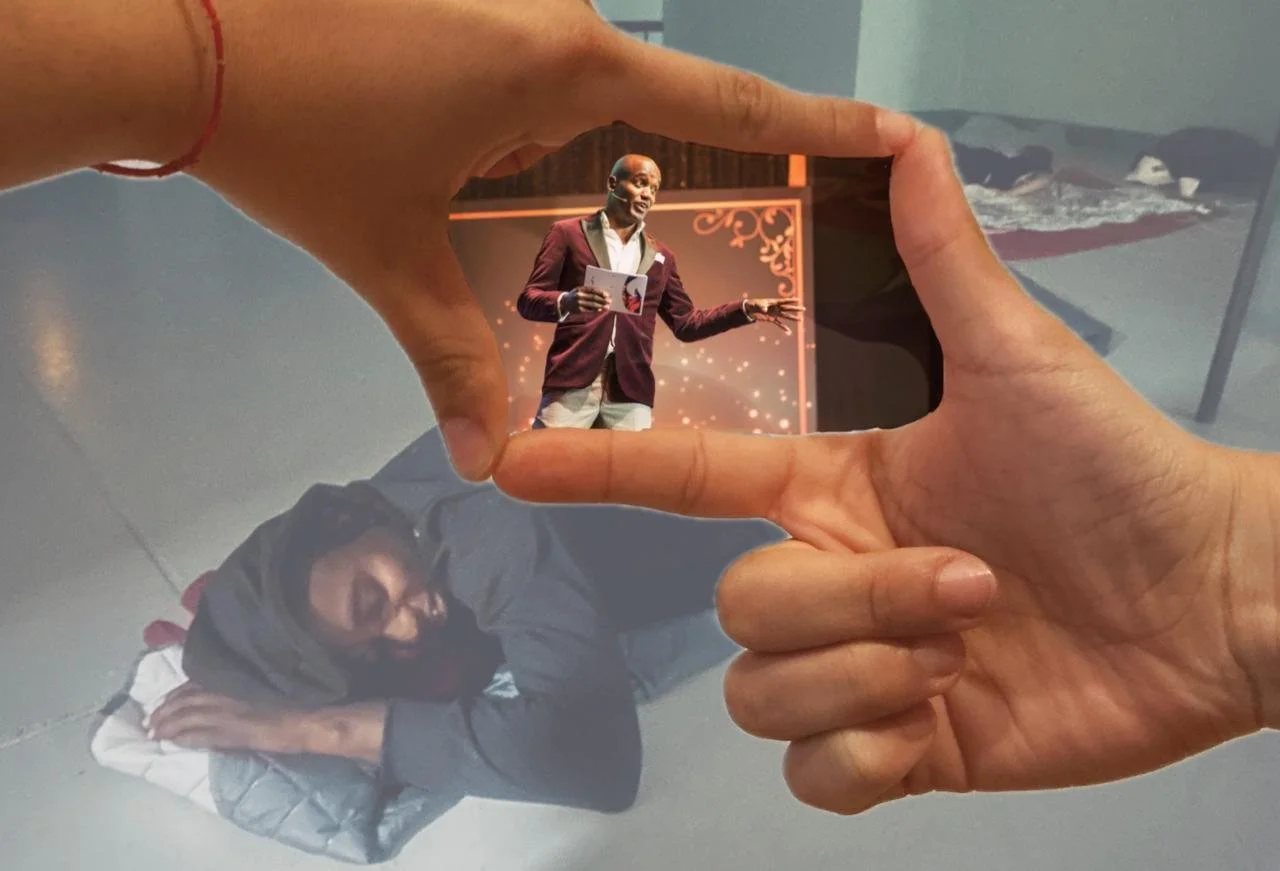
How reframing personal narratives and dismantling hiring biases can open real employment doors for people experiencing homelessness
By: Johanne Cossin, Mariana Galbero, Esmeralda Ibarra
For years, it was believed by employers and homeless people alike that homelessness was something to be ashamed of. According to a study conducted by Camardese and Youngman, “People experiencing or at risk of homelessness are typically described or stereotyped (for example, in the media) as unmotivated, resistant to services, and content to rely on income support.”(Mavromaras et al. 2011) This is a widespread view that does not reflect the reality of most individuals experiencing homelessness. Actually, according to other research, “homeless adults are no less motivated or interested in work than other adults are” (Mavromaras et al. 2011) and yet they are continuously discriminated against in the employment process. This misconception leads to them being severely undervalued in the labor market. Therefore, reframing homelessness is necessary because it can positively impact homeless individuals’ employment opportunities by strengthening their personal narrative and directly targeting the biases within the employment process. Thus, becoming a shared accountability between the individual and the system, improving the individuals’ self-esteem, and, in turn, how they are perceived by employers.
The first step comes from the individual becoming aware of the narrative they have attached to their identity. As Toporek and Cohen explain, personal narratives include one's self-perception in relation to their environment and experiences; internalizing a negative narrative around self-worth leads people to “dwell on their personal deficiencies and envision failure scenarios”, (Toporek, R. L., & Cohen, R. F. 2017). Like a self-fulfilling prophecy, they are perceived through their deficiencies which also shapes how they present themselves to potential employers. A productive intervention is therefore to redirect this narrative toward what psychologists Markus and Nurius (1986) call “possible selves”: mental images of who one could become. Possible selves are specific and motivating, they function as cognitive bridges between a person's current circumstances and a future professional identity, giving them something concrete to orient toward and communicate to employers. This shifts the individual's focus from what they lack to what they are capable of becoming, which not only improves self-esteem but also increases persistence through adversity. The Homeless Entrepreneur's Voices Program applies this by inviting people experiencing homelessness to articulate their own story on their own terms through their website. This creates space for them to gain internal clarity while simultaneously providing them with visibility for employers. (Dunkel, C., & Kerpelman, J. 2006)
But what are positive and active agents? Those who take initiative, search for opportunities, and persist through adversity, what researchers call a “proactive personality.” This concept sits at the heart of Ryan D. Duffy et al.'s Psychology of Work Theory (PWT), which offers a useful framework for understanding how people experiencing homelessness navigate the labor market. PWT proposes that decent work, employment that is safe, fairly compensated, and fulfilling, is not equally accessible to everyone, and that structural factors such as economic marginalization and societal bias act as significant barriers to attaining it. However, the theory also identifies a set of moderators that can mitigate the impact of these barriers, among them proactive personality and social support. While the obstacles are real, cultivating a proactive orientation can transform an individual's ability to navigate them. This shows how a positive personal narrative toward agency and possibility is a grounded strategy that improves self-esteem, strengthens how individuals present themselves to employers, and increases the likelihood of securing and sustaining employment.
Although individuals are often made to carry the full responsibility of facing homelessness, some barriers go beyond a person’s behaviour. Addressing systematic issues requires shifting part of the accountability onto the system by targeting the biases within the employment process. Returning to Duffy et al.'s PWT, job readiness emerges as another key moderator that can facilitate this process. The labor market tends to prioritize candidates who seem to be “ideal jobseekers”: someone presentable, healthy, housed, emotionally stable, with a work history and references (Mavromaras et al. 2011). This is a result of the marginalization of people who have economic constraints or represent some minority; a majority of cases of those experiencing homelessness. Being unfairly scanned and disregarded, these individuals find it harder to find work, even though they may be “job-ready.” A concrete step employers can take to mitigate this is to revise hiring criteria that excludes people experiencing homelessness, such as fixed address requirements, employment gaps, and the absence of professional references, none of which are reliable indicators of job performance.
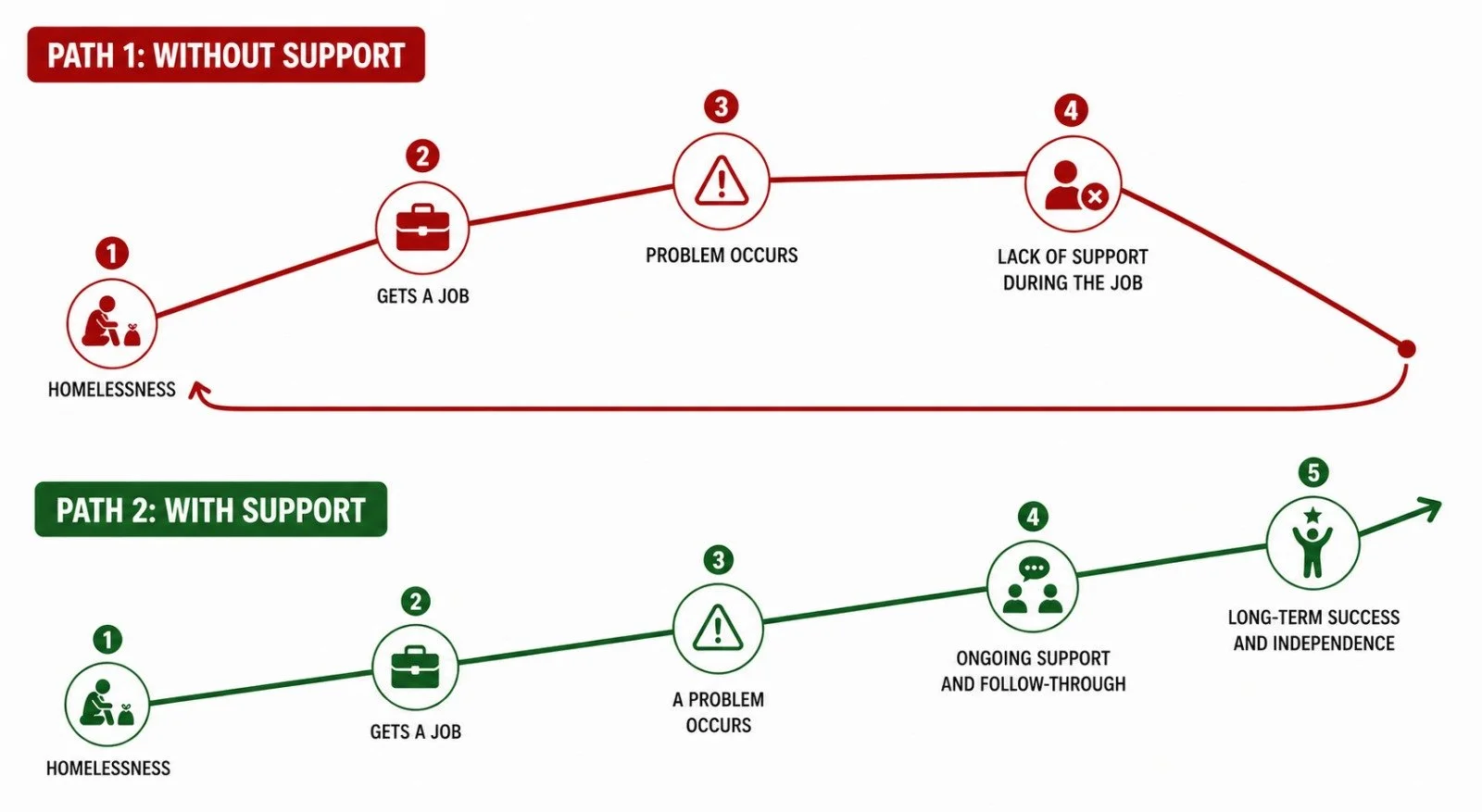
If an individual does secure employment, the probability of sustaining it long term is very slim, a recurring pattern seen as career advisors tend to “neglect” people experiencing homelessness as soon as they find employment believing that they will become fully independent. This lack of follow through identified by the 'Homeless Entrepreneur's’ organisation resulted in the creation of the HELP Program, a one-year program that “provides a support pathway to independence through incentivizing employment opportunities and fostering entrepreneurial activities.”
Having empowered over 3,500 homeless beneficiaries, Homeless Entrepreneur has proven that maintaining network support increases the likelihood of people experiencing homelessness to permanently overcome it. Homeless Entrepreneur was built on the vision of supporting people “willing and able to give their best;” but who lack the network, resources, and continued support necessary to act on that willingness.
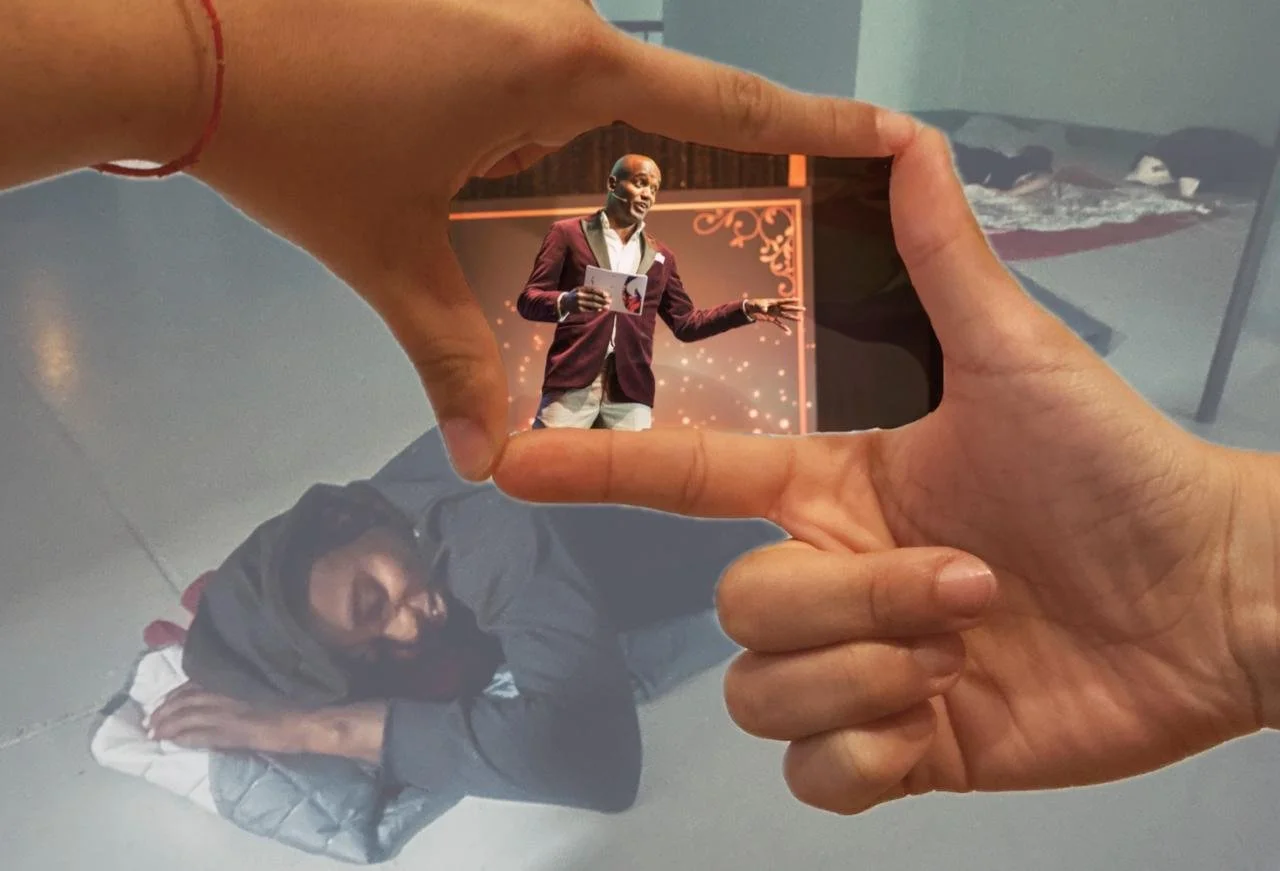
Erik Eklund is a great example of how someone experiencing homelessness can turn his or her life around.
Reframing homelessness unlocks employment opportunities for people experiencing homelessness, by rebuilding personal narrative and dismantling institutional barriers. Supporting individuals in reclaiming their voices and reframing their story improves how they present themselves as respected candidates. But, individual effort alone is not enough; hiring processes must sustain support through training programs, advising, etc. This is what will truly give people experiencing homelessness a fair and sustained chance to rebuild their lives. The discrimination they face is outdated, and it is our collective responsibility to challenge the systems that reinforce their exclusion from the labour market. As Homeless Entrepreneur's work shows, these are people willing and able to give their best, they simply need the network, resources, and sustained support to make that possible. It is time for us to even the playing field, amplify their voices and that as they stand up for themselves, they do not have to stand alone.
*Thank you for reading this article! If you would like to contribute your thoughts, pictures or videos to this article or believe you have found mistakes and/or misinformation, please contact us and tell us about it by clicking on the button next to this text, so we can take your feedback into consideration.
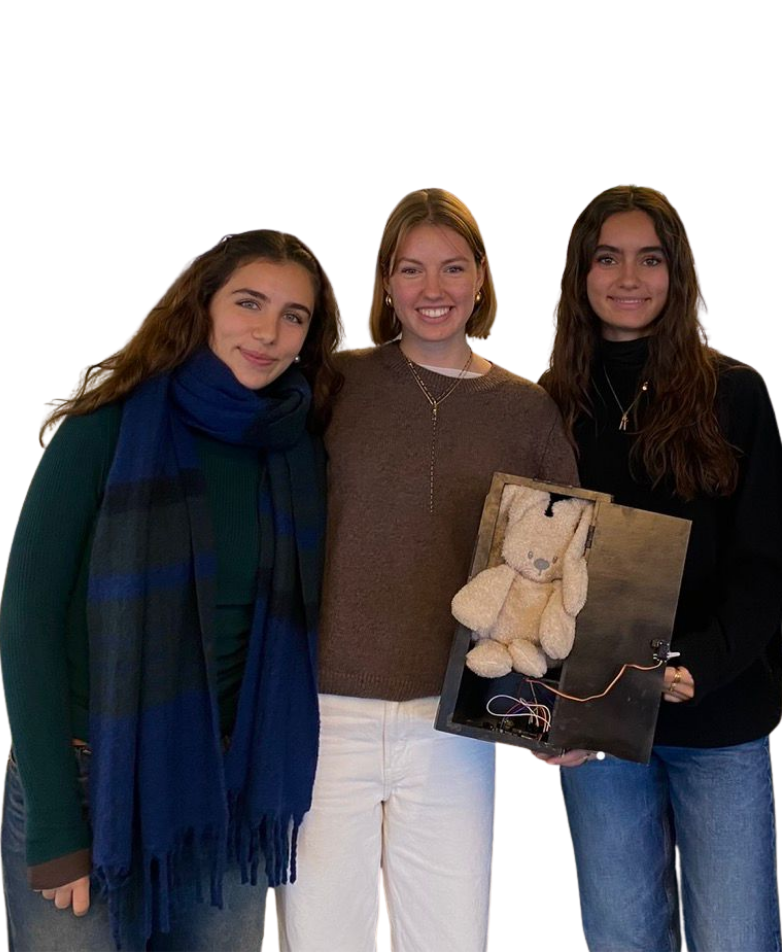
Connect with the authors, Johanne Cossin, Mariana Galbero and Esmeralda Ibarra via LinkedIn!
References
APA Citing
1) Mavromaras, K., King, D., Macaitis, K., Mallett, S., & Batterham, D. (2011). Finding work: Homelessness and employment. Canberra: Department of Families, Housing, Community Services and Indigenous Affairs.
2) Toporek, R. L., & Cohen, R. F. (2017). Strength‐based narrative résumé counseling: Constructing positive career identities from difficult employment histories. The Career Development Quarterly, 65(3), 222-236.
3) Dillahunt, T. R., Garvin, M., Held, M., & Hui, J. (2021). Implications for supporting marginalized job seekers: Lessons from employment centers. Proceedings of the ACM on Human-Computer Interaction, 5(CSCW2), 1-24.
4) Dunkel, C., & Kerpelman, J. (2006). Possible selves: Theory, research and applications. Nova Publishers.
Editor & VR Review Reflection
Our revision process was informed by two rounds of feedback: a peer critical review of the written article, and a trial VR presentation of our delivery.
On the written side, the early draft of the article we showed to Johanne’s roommate (our designated external editor) presented several weaknesses that required substantial revision. Our theoretical framework, particularly the introduction of the Psychology of Work Theory and proactive personality, was initially underdeveloped. We were name-dropping concepts without fully explaining their mechanics or relevance. So, in response, we rewrote that section to clearly define PWT, explain the role of moderators in practical terms, and make the logical connection to homelessness explicit.
Similarly, our original framing of the “future story” concept relied on informal language that leaned into referencing manifestation and vision boards; this undermined the academic vocabulary we were aiming for. We replaced this entirely with Markus and Nurius's possible selves theory, which provided the same conceptual function but with proper empirical grounding. We also addressed an imbalance in structure between the individual and systemic sections of the article (we had much more words on personal narrative than systemic biases), expanding the latter to give institutional barriers (such as hiring bias and the marginalization of minority groups) the analytical depth they deserved. We made additional revisions like tightening our thesis statement that repeated itself in the introduction, removing informal phrasing, and relocating the Homeless Entrepreneur quote from the conclusion into the body of the article where it could be properly contextualized (and wouldn’t be bringing up new evidence in the conclusion).
On the delivery side, our trial VR presentation identified three individual areas for improvement: clarity of elocution when responding to questions, speech pace, and overuse of filler words. Each one of us worked on our specific weakness through targeted rehearsal. We also received collective feedback on eye contact and physical presence, which we addressed by reducing dependence on our slides and becoming more intentional about how we occupied the space during delivery (by practicing without notes and filming ourselves to look back on our movements). The Q&A feedback was particularly instructive : our answers, while seemingly okay, missed the precise theoretical vocabulary present in our evidence. So, we revisited our sources and prepared structured answers grounded in PWT and possible selves theory with the help of an AI, to ensure our spoken responses would reflect the same rigor as the written article.
All together, this process helped and pushed us to treat the presentation not as a summary of our article, but as a performance to show our thorough understanding of the subject.