No Results Found: “What should I do if I am homeless in Spain?”

Written by Marley Diligent

This is insane and a big issue in the world we are living in today. According to the Borgen Project, there are around 23,000 and 35,000 homeless people living in Spain, which makes up about .07% of the population in total. When conducting research regarding what individuals should do if they are facing inadequate and insecure homelessness, I experienced much difficulty finding helpful resources. According to the World Institute of Global Homelessness, there are a total of 1.6 billion people experiencing homelessness and about 100 million of those people have no housing at all. I had the idea to research a more direct question “How do I survive homelessness?” and I was shocked by the results. If I was one of those 1.6 billion homeless individuals the answers I would be the following: get a rucksack to hold my belongings, hide your sleeping bag in a safe place, have a change of clothes, and keep food in a tin to keep rats and squirrels out. These answers are unacceptable. Resources need to be easily available and straightforward for someone who is actively motivated to escape the cycle of homelesness.

            Andrew Funk, who is the founder of the Homeless Entrepreneur, experienced homelessness himself. I was curious to see if he did any research to find solutions and what initiated positive change in his life. He explained that he never searched for typical resources, for example; a homeless shelter or access to free food. He utilized his network through social media outlets, actively searching for work he could get paid for. Along with that, he began researching, studying and getting to know the people who were in similar situations as him. He stated “people” were the most useful resources because they could give him access to opportunities and later earn well deserved money.

It was all about trust, support, and people believing in me when it was hard to believe in myself.
— Andrew Funk, Founder & President of Homeless Entrepreneur

He was able to network with the right people in order to gain access to a brighter future. He is now running a successful career, has incredible connections, and is married with two children. Hearing about Andrew’s experience of life changing resources reinforces how important having direct access to opportunities for motivated individuals truly is. 

One of Homeless Entrepreneur’s main programs is ¡called Homeless Voices, which is the first step in initiating positive changes for an individual experiencing homelessness. The Homeless Voices Program allows individuals to connect with their community and then leads to the possibility of entering the HELP Program, which provides various housing and employment opportunities. It gives people the chance to grow their income, build assets, and develop a stable job and life.

Donate & Support Homeless Voices

An individual named Micheal contacted the Homeless Helpline via WhatsApp from Germany and participated in the Homeless Voices program. Doing so allowed him to gather the support of Homeless Entrepreneur’s community network, which consequently helped him in the process of getting back to Peru. If Michael never became  aware of this program his future could have gone in many other directions or, even worse, none at all. Individuals in similar situations should be able to access this resource without having to search online for months or hear about it from a friend when it could be too late. 

I also got the chance to talk to Larry Adesuyi who is currently in the HELP Program. I asked where he looked for resources when he started experiencing homelessness along with how he learned about Homeless Entrepreneur. He explained he searched for resources everywhere online, but was unsuccessful. He finally found out about Homeless Entrepreneur through a connection he had made on LinkedIn.

Larry was a motivated individual looking everywhere online for support to help improve his quality of life. He exemplifies another reason why direct support has to be easily accessible when someone is actively trying to make a positive change happen in their life.

Donate & Support Larry's HELP Program

The HELP program, which provides a support pathway of independence in a year, is an opportunity for participants in the Homeless Voices program, who apply for it and are accepted in the program. HELP is an empowerment-based program that mainly focuses on professional development, training, health, housing, finance, legal and communication opportunities. It also addresses poverty and may lead to the Launchpad Housing Program, while promoting active citizenship and well-being in a holistic sense. Larry provides a clear example of someone who is actively working hard physically, mentally, and emotionally to improve his life with the resources the Homeless Entrepreneur can provide as well as the ones he finds on his own.

Individuals having access to Homeless Entrepreneur’s programs can create meaningful impacts for a person, but in order to do that a person experiencing homelessness needs to be well known and his or her story needs to be communicated properly. It's unacceptable that nothing appears when searching for “Solutions if I am homeless in Spain.” Every time we communicating online, with our partners, donors, volunteers, and current Homeless Entrepreneurs, we are also hoping to attract more candidates who fit the screening requirements for our programs. We, as a society, need to be proactive about creating positive change to end homelessness, and there is no reason why accessing resources should be difficult and vague for people who truly want a better quality of life.

A donation of just as little as twelve euros can go a long way towards someone entering Homeless Entrepreneur’s programs, which open up opportunities that will leave an impact on those being helped and those helping because everyone learns along the way. If you are currently struggling with homelesness, hear, or know someone struggling, we invite you to apply to become a Homeless Entrepreneur. Do not hesitate to reach out to us and begin the change you want to see in yourself and in the community you live in or want to support.

Send us your feedback or contribution!

*Thank you for reading this article! If you would like to contribute your thoughts, pictures or videos to this article or believe you have found mistakes and/or misinformation, please contact us and tell us about it by clicking on the button next to this text, so we can take your feedback into consideration.

Connect with the author, Marley Diligent, via LinkedIn!

Photo by Jose Sanabria.


Barriers to Healthcare for the Homeless- A Global Perspective

Written by Anika Srinath

Healthcare is a basic necessity that consistently seems just out of reach for those in difficult financial situations. However, there are often a variety of environmental and societal factors apart from economic status that also pose barriers in accessing healthcare. There are about 154 million people worldwide currently living on the street (Brannon, 2019), all of whom are facing insecurity in multiple areas of their lives. Furthermore, living on the streets exposes these individuals to a plethora of dangerous health conditions that they cannot seek treatment for. Yet, it is important to realize that each country operates in very different ways, and people living on the street in the US will face a vastly distinct medical experience from those without homes in Spain. 

One phrase full of truth I heard when I was younger, which didn’t sink in until my state of homelessness, was ‘poverty kills.’
— Andrew Funk, Founder and President of Homeless Entrepreneur

The founder of Homeless Entrepreneur, Andrew Funk, experienced homelessness in Barcelona. His living situation exposed him to specific health conditions that he likely could have avoided had he been in a better economic situation. For instance, since he could not afford public transportation or a car, he would walk every day for hours on end, which led to painful knee problems. When he attempted to seek treatment for his pain, he found that private healthcare unaffordable and public healthcare inefficient. A steep economic barrier both caused and prevented treatment for a severe physical health issue, and this situation is not unique to one person, and in fact is quite common worldwide.

Learn more about becoming a health partner

Ramon Feiner, a man who experienced homelessness for over 15 years in Tarragona, emphasized the importance of the climate on health. After he found himself without a roof to sleep under, he was forced to leave his hometown of over 30 years as it was high above sea level and not realistic to sleep in the street. He decided to move to a town closer to the seaside where the outdoor climate was more comfortable. In general he did not struggle with serious health issues, except for once when he had to go to an urgent care center. Afterwards, he recovered his strength in an evangelist center where he received food, housing, and a daily activity to stay occupied. He stayed in the center for about two to three months before returning to his life on the street.

Homeless Voices interview with Ramon given by Josse Sanabria, HE Photography Director, in Spanish.

Feiner’s story reveals the gaps in the Spanish public healthcare system. Though he was able to receive urgent medical attention, there was no follow-up and he was left to complete his recovery on his own. However, religious organizations were able to fill the gap and provide him with a place to rest and recuperate. Government facilities are not sufficient for providing those in poverty with adequate medical care, and private organizations are needed to support public care. Fortunately, Feiner does not recall any other major health conditions, and even noted that his time on the street boosted his immune system and he is not less susceptible to various illnesses.

I’ve seen that even when homeless individuals enter the system, it can be challenging to provide healthcare without stable housing.
— Madison Rubert, Marketing and Communications Specialist

Madison Rubert, a marketing and communications specialist dedicated to social change, commented on the populations that lack access to healthcare in the United States. She noted that availability of medical services appeared to be related to zip code, with less access to healthcare in the neighborhoods that were mainly composed of minorities that earned below 30% of the annual mean household income per zip code. Furthermore, as mentioned in the above quote, homeless people require stable housing in order to acquire adequate healthcare. For this reason, she states that a vital step is to provide individuals on the street with supportive and permanent housing in order to help them access medical attention. She also provided a sense of the scope of the issue with the grave observation that the middle class continues to shrink, and that many middle class people can no longer afford the costs of high-quality healthcare. This is in heavy contrast with Spain, in which there is a large public sector of healthcare that provides medical services for free, although it may be slower than private care.

The president of the Colorado Coalition for the Homeless, John Parvensky, noted the major issues that lead to the disproportionate rates of health conditions faced by those on the streets in the United States. According to Parvensky, the biggest issue those in poverty face is a lack of affordable housing, thus forcing them to live in the streets in harsh weather conditions that expose them to specific illnesses. This was seen in Funk’s story, in which he mentioned how his life outdoors resulted in severe knee issues that he was unable to seek treatment for. Parvensky then stated that the next most major issues impacting the health of the homeless are ineffective behavioral health services, addiction, and domestic violence. Thus, Parvensky indicates that many people who are homeless likely suffer from mental conditions that they were unable to receive help for, and that life on the streets exposes those in poverty to an increased occurrence of drug addiction and domestic violence.

Donate & Support our Health Department

In Australia, Street Side Medics noted that common health conditions for those experiencing homelessness are mental illness, substance abuse, and chronic conditions. In terms of barriers homeless people face in accessing healthcare, beyond financial difficulties, homeless people may also not be aware of the services they can access. Furthermore, stigma about their health condition and living situation as well as distrust in the healthcare system block homeless people from seeking medical care. Finally, a significant barrier found in providing healthcare services to those experiencing homelessness is a lack of communication between health and homeless services. Though this article about common illnesses and barriers specifically focused on the homeless population in Australia, it is likely that homeless people around the world face similar illnesses and barriers. Parvensky had also noted that common conditions faced by homeless people in the US are mental health issues and substance abuse. Lack of awareness and sense of shame are common factors that alienate people from the healthcare field. There is rarely proper coordination and funding for welfare programs meant to serve the poor. Around the world, there is still much work to be done before society reaches a point in which all populations can receive equitable medical care, regardless of their income level or living situation.

Send us your feedback or contribution!

*Thank you for reading this article! If you would like to contribute your thoughts, pictures or videos to this article or believe you have found mistakes and/or misinformation, please contact us and tell us about it by clicking on the button next to this text, so we can take your feedback into consideration.
Connect with the author, Anika Srinath, via LinkedIn!

Photo by Jose Sanabria.


Exploding Public Debt & Budget Surplus Boom

Written by Louise Maheo

WHAT ARE WE TALKING ABOUT?

Humans are social beings and have learned to live in societies for thousands of years. A group is a numerical advantage in times when predators much bigger than a human beings were a danger to the human species. Over the years, humans have been able to rise to the top of the food chain and build a powerful society. At the national level, a society is not autonomous, insofar as it depends on countries for its trade and its politics. Humans have made their society an autonomous, global construction, even though, on a planetary scale, we consume more resources than the earth can produce.

WHAT IS PUBLIC DEBT?

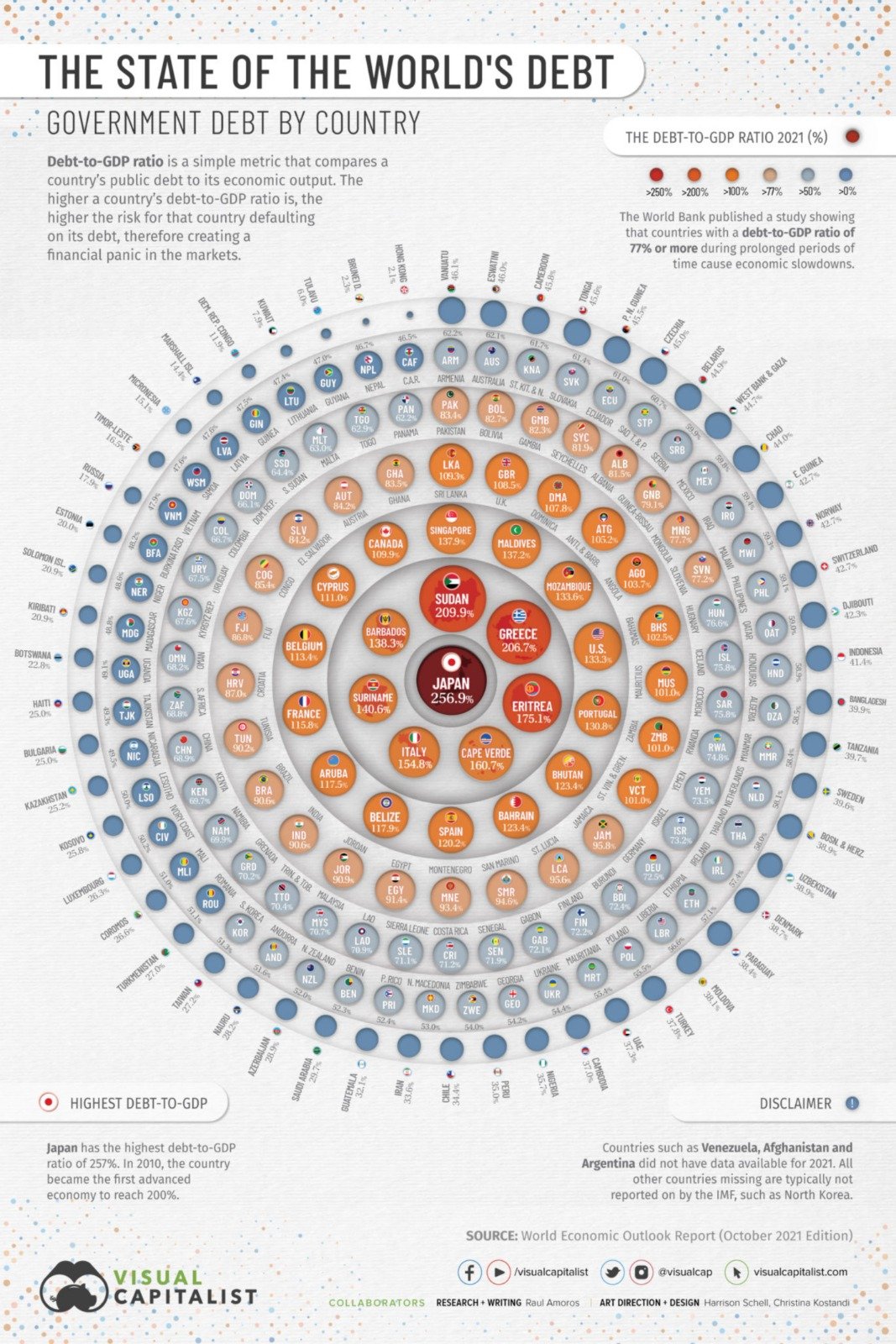
Public debt works in the same way people extract resources without contributing and become dependent on an expensive and unproductive system. It is an accumulation of current expenditure not covered by covered by revenues. Public debt is usually explained as a percentage of gross domestic product (GDP). Using this name allows the debt to be compared to the size of each country's economy, and it also facilitates international comparisons between countries.

Public debt tends to be a chronic item in state budgets. Today, with the current governments that avoid austerity, far from amortizing it, they get more indebted.
In the end, if it is paid for, it will be by future generations for the most part.
— Juan Matilla, Financial Coach at Homeless Entrepreneur
End Homelessness with us

DO WE REALLY KNOW WHEN PUBLIC DEBT STARTED?

We asked William Thomson, the founder of Virtual Event Campus, who is studying in a MSc in the Green Economy.

It’s existed for 100s of years in almost every country. Up until 1971 debt was linked to a countries ability to change notes/coins to gold (gold standard) but this constrained US spending on Vietnam so they ended the exchange. Now currency is fiat meaning its a promise to pay.
— Willam Thomson, Co-host of SCOTONOMICS
Learn more about our Social Policy Department

With this testimony, we can see that over the years, debt has not developed in the same way, it is not the same as before. Money has also changed its status, since everything is virtual and our bank accounts are just numbers.

So government debt has always been with us. Most countries most years run deficits (gaps between tax and spending) and having a “debt” is normal. So there’s unlikely to be any set date for the start of debt. Also, government debt isn’t like household debt and a government debt is partly public surplus.
— Willam Thomson, Co-host of SCOTONOMICS

WHAT FACTORS ENCOURAGE PUBLIC DEBT?

Public debt leads to high inflation hence people experiencing poverty only suffer because the cost of living increases.
— Clinton Amam, Statistician & Homeless Entrepreneur in Nigeria
Donate & Support Clinton's HELP Program

CAN THE PUBLIC DEBT BE REPAID?

I believe public debt CAN be repaid, otherwise lenders wouldn’t lend money. Now, if you ask me if public debt SHOULD be completely repaid, I’d say NO because it isn’t necessary. I believe this because it can be used as a tool for creating more profitable money, which allows the debt to be increased intelligently.
— Daniel Amatriain, recent marketing graduate from ESIC, who is entering the venture capital world as an employee in Sept 2022.

BUDGET SURPLUS

The opposite of this situation would be a budget surplus boom, as people generate wealth and consume resources while contributing and becoming active, independent citizens. This situation could be compared to the highest point of efficiency in both demand and supply: everything is optimized.

Community Surplus

HOW CAN THE BUDGET SURPLUS BE OPTIMIZED?

Theoretically, buyers buy at the highest price, and sellers at the lowest price. Thus, buyers and sellers optimize their activities. The budget surplus is obtained by adding the consumer surplus and the producer surplus. These are the surpluses that form the laws of the market. The surplus is a measure of the gains from the exchange, i.e. the advantage drawn by the participants (producers or consumers). Therefore, the higher the surplus, the higher the gains from exchange.

To conclude, although it seemed legitimate and normal to ask those who benefited from these current expenses to finance them through a "refundable credit," it was not successful. Since COVID-19 crisis, most countries have seen their public debt increase, being obliged to borrow from the financial market to repay their debt. The “perfect” solution would be to encourage companies to participate in the budget surplus boom because it would encourage markets and the result would be increased state flexibility, reduced interest costs and the ability to invest in future growth.

Send us your feedback or contribution!

*Thank you for reading this article! If you would like to contribute your thoughts, pictures or videos to this article or believe you have found mistakes and/or misinformation, please contact us and tell us about it by clicking on the button next to this text, so we can take your feedback into consideration.
Connect with the author, Louise Maheo, via LinkedIn!