
How to Overcome the Gaps and Prejudices of Poverty

Written by Lara Hupperten

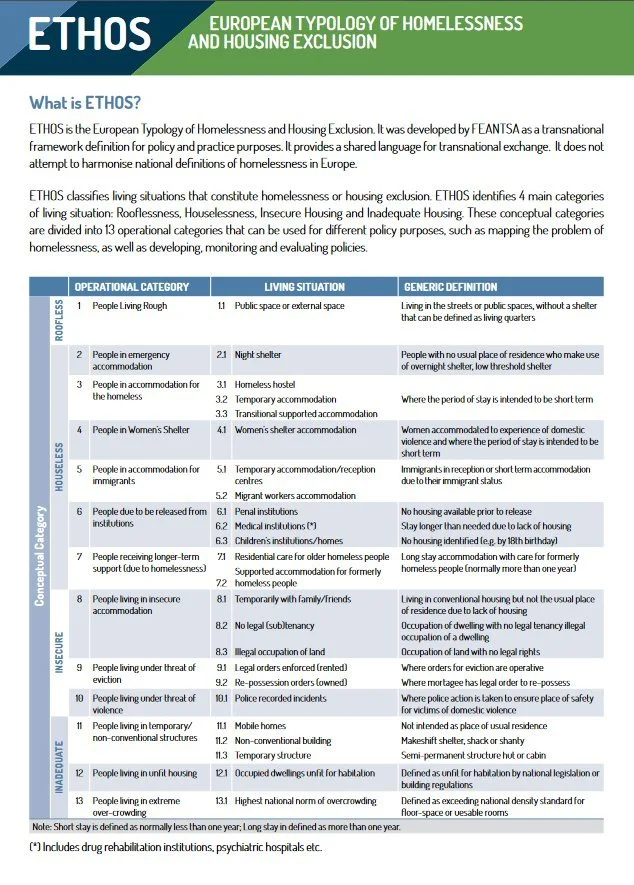
Homelessness is a well-known description of a situation in which the affected person lives on the street with barely enough to survive. But there is no official definition since 1992, which causes difficulties in solving the problem of homelessness. The best description in Europe is most likely ETHOS, which is the European Typology of Homelessness and Housing Exclusion developed by FEANTSA.
I'm homeless & want to work again!

Little has really change and most people use the word homelessness in its most limited sense to refer to people sleeping rough, which means in the street. Many people experiencing homelessness need to beg for money and search for a safe corner with limited protection to none to sleep on. Additionally, the number of homeless people continually increases. 7.98 billion people are living on Earth right now and around 100 million are considered homeless.

Many citizens have seen someone lying on a bench with dirty clothes and all his or her belongings next to him or her, and we all should admit that we are passing by most of the time without even noticing them.

3 Common Misconceptions & How to Overcome Them

  • Most people become homeless due to to drugs or mental health issues. To overcome this misconception, governments must collect greater data regarding the causes of homelessness and promote the results to all ages of society i.e. kindergarden to university, the workplace and even residencies for the aged.

  • People experiencing homeless are lazy and do not want to work. To overcome this misconception, we must build safe bridges of communication, so those with and without housing can have heart-to-heart conversations. Knowledge leads to greater understanding and empathy.

  • There’s an excess of services and support to help homeless people. To overcome this misconception, we must give people suffering from poverty a space where they can explain the opportunities and limits of the support they receive. The majority of the services that are provided are assistance based instead of empowerment based, which means that people are able to have a comfortably numb life instead of one s/he is excited about.

Send us another myth about homelessness

A lack of interest in overcoming the gaps and prejudices of poverty leads to a lack of knowledge and ultimately a lack of recognition, which the follow interviewee highlights in her quote.

Society tends to believe that homeless people deserve to be where they are without knowing their individual stories. Consequently, most people pass them by on the street without acknowledging their existence.
— Meritxell Martin I Pardo, Ph.D.Transition Network Facilitator at Generalitat de Catalunya

A comment on this issue drives this point home.

The same individual even shared his thoughts about how to address some of the stigmas.

Homelessness can happen to everyone. It could be the loss of a job because the company is closing or the financial situation of the state or nation, especially during conflicts like Ukraine, which leads to higher bills and inflation.

End Homelessness With Us!

Homeless people face difficulties that deteriorate their physical and mental health at a faster rate than when they have a safe place to call home and a steady job. Unfortunately, most of society tends to rely on prejudices instead learning more about those affected by poverty. We have learned to categorize people by their appearance and their economic position.
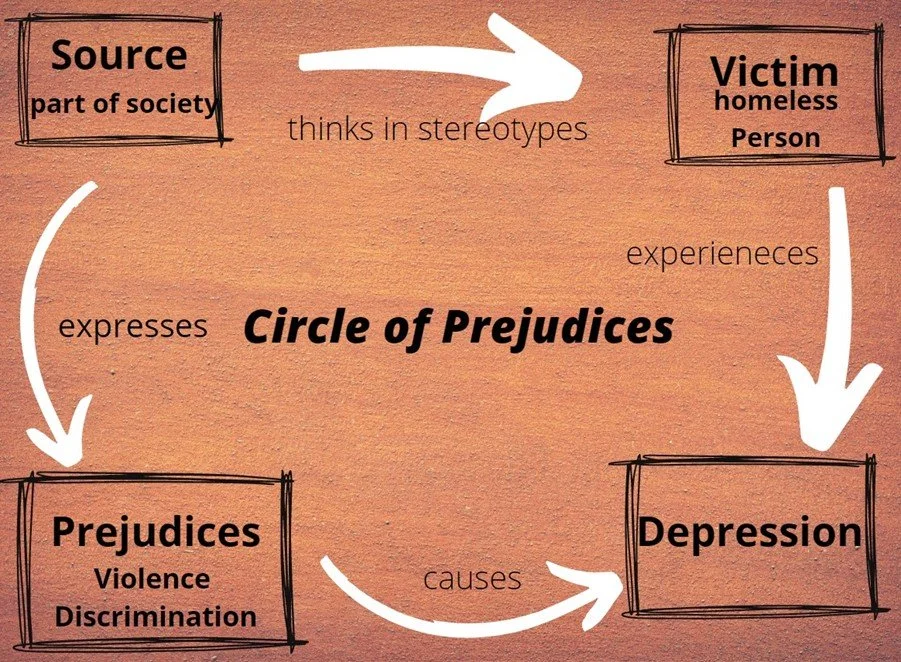
Once we recognize the circle of prejudices, we can start overcoming them.

People should become more open-minded to the others suffering from homelessness.
— Jiejun Emily Yang, HE health intern and psychology student at the University of California Santa Cruz

The way of thinking needs to be changed, so more human beings have access to the services and support promised to them by their national, regional and local government. Also, the media needs to go beyond click bait, and participate in the process of empowering people out of poverty. For example, service helplines like the Homeless Helpine can be included as a call-to-action at the end of each piece of news. People experiencing homelessness need a voice to tell their individual stories, which will provide greater clarity to their real situation; and a presence by being included as an active, working citizen, which is the aim of Homeless Entrepreneur’s HELP program. We won’t end homelessness for a 100 million people in a day or a year, but we can start reducing it today!

Hope is failing and succeeding while always proceeding.
— Andrew Funk, President of Homeless Entrepreneur & Social Impact Activist for Homeless People
Send us your feedback or contribution!

*Thank you for reading this article! If you would like to contribute your thoughts, pictures or videos to this article or believe you have found mistakes and/or misinformation, please contact us and tell us about it by clicking on the button next to this text, so we can take your feedback into consideration.

Connect with the author, Lara Hupperten, via LinkedIn!


The Importance of Health Awareness for the Homeless Community

Written by Jiejun (Emily) Yang

What is the first thing you notice when you see a person sleeping on the street?  

You may feel sorry for that person and drop the change you have left over in your pocket, or you do not have any thoughts at that moment because you are used to seeing people living on the street. These intuitive judgments make you have habitual thinking about what you have seen, and the last thoughts in your mind are not consciously recognized.  

When we think about homelessness, we usually recall the people who live on the street because that is what our eyes and ears tell us, but it’s only the surface: there are actually 13 different operational categories of homelessness according to FEANTSA. Perhaps a person’s first experience of people experiencing homelessness is that of a tired face and a blanket covering their unhealthy body on the street. Then you are curious and ask the people next to you, “why are those people sleeping there?” Then, people around you tell you that they are homeless because when people were younger and asked the same question to the adults, they were told the same thing: homeless people live on the street because they do not have a place to live.  

Call our Homeless Helpline (WhatsApp)
“Missing a home/address without one you are basically a ghost citizen, nobody wants to see you so you don’t exist.” In his experiences, everything starts with a home, where everyone can find you and your existence.
— Jeroen Nederveen, a man on the verge of becoming homeless in The Hague, The Netherlands

The impression of homeless people sleeping on the street is the most discriminative and profound stereotype toward people experiencing homelessness. Since the most frequent location we meet them is on the street, we have been taught by other adults for a long time that homelessness is synonymous with rooflessness or houselessness. Compared to the previous period, the number of unemployed persons increased by 100,200 in the first quarter of 2022, which lead to unstable living security. Lack of stable housing and income is a common way of becoming homeless, but the variables causing homelessness are many.

Learn more about our Health Department

A European framework called ETHOS (European Typology of Homelessness and housing exclusion) was created in 2005 to improve the understanding of the diverse conditions of homelessness and define 13 types of homelessness. The factors causing homelessness include, but are not limit to, loss of job (35%), bills higher than earning (15%), evicted by family member (13%), abuse at home (11%), incarcerated (11%), change in family status (10%), sick/disabled/mental issue (10%), and drug/alcohol (9%). Each of these individual variables interact with each other and cause homelessness. The status of homelessness then becomes the consequence of a wider range of determinants. Rough sleeping or people living on the street is the most visible and vocal aspect of homelessness.

Attributing homelessness to a single characteristic alone does not explain why it does not improve after the provision of suitable living conditions. Research on the association of building interpersonal relationships and perceived health services with the improvement of the health condition of 1382 homeless people in the Basque Country of Spain shows the positive relationship between the time of a person becomes homeless and the worsening of one’s health, meaning that prolonged outdoor exposure has an adverse impact on one’s health and life expectancy (Fajardo-Bullón et al., 2021). As well as the result of this association between interpersonal relationships and Self-Rated Health (SRH), the subjective assessment of health status shows that a person's health status improves thanks to interpersonal relationships. However, the disproportionate gender in the sample and the high drop-out rate indicated some limitations in the research. By discussing the impact of gentrification and housing instability on the access to health services in Washington, DC, the housing status of homeless people influenced their access to medical, behavioral health, and other social services (Ruiz et al., 2022). Even though further understanding of the impact of gentrification on marginalized and homeless populations is needed to improve the limitation of the research, the health issues that happened in the homeless community are still considerable.

I believe that, in many cases, the experience on the streets destroys their self-esteem, sense of value and inhibits self-care. Thus, it is very easy for many to “forget” to take care of their health. They don’t remember how important it is — and they are.
— John Ransom
Donate & Support our Health Department

Therefore, attention to health services for the homeless is warranted. Without stable housing and living security, homeless people are more likely to contract diseases and cannot get effective treatment on time. Even though there are pharmacies on most streets, they are not enough for homeless people who need specific prescription drugs.

I describe the three ‘A’s for health professionals as awareness, attitude and accountability. Awareness is crucial - understanding the net of care and their role in it, then whether the make a conscious or unconscious decision to support health need by their attitude and lastly - how are they held accountable for that decision? Health needs are so invisible unless commissioners monitor homeless health.
— Dr. Maria Frances Fordham, specialist in homelessness health care, who provides reflective guidance sessions and workshops
To assist people experienced homeless with specific needs, the first thing is to find out the axis of the problem and several levels of inducing factors independent from the consequences. Homeless people are in a total state of vulnerability, in the case of health, they suffer the climatic impact of the place that further aggravates their situation. One of the factors that intervenes in their health is malnutrition and its consequences. Diseases, having to survive in hostile environments in terms of cleanliness and hygiene. Psychological disorders among so many. But one of the main axes that makes them end up in a homeless situation can be due to family, economic problems, drug use, alcohol, problems with the law, etc., which ultimately brings about legal conflicts. In short, it is that vulnerability mentioned at the beginning, called health problems.
— Pablo Sebastian Reguera, a legal advisor in our legal department

A survey on support centers for people experiencing homelessness in Spain by Instituto Nacional de Estadistica has shown that among 1,019 shelters for homeless people, 18.5% of the shelters addressed drug addiction. Meanwhile, 12.9% served with mental disorders, and 12.9% provided alcoholism treatment. By providing health services individually for a homeless person with a specific symptom, the efficacy and time-consuming of assisting the homeless community are improved. As these numbers show, the shelters are focusing on providing assistance-based support and the percentage of homeless people receiving support for mental health and substance abuse issues is probably lower than perceived by society.

I think specialist homelessness services are crucial as they deliver resources directly to homeless people. But if you wanted to improve general health services, so that every individual could get equal access you would have to allow more time for clinicians to consult with their patients (homeless people tend to have multiple health conditions, as do many old and/or poor people); you would need to have highly skilled clinicians in frontline roles; less triage and onward referral as people who struggle to access services – the socially disadvantaged, immigrants and refugees, poor people, people with mental health problems – won’t access hard to access services; you need a redistribution of health resources, so that most are concentrated in areas with the greatest social deprivation; and you need a recognition of the importance of the interplay between poverty, inequality, mental illness and poor health. Finally, Adverse Childhood Events (ACEs) predict all forms of mental illness, social disturbance (criminality, alcoholism, homelessness) and physical illness (including heart disease and cancer rates), so you need huge resources put into early parenting and support for children and parents of young families so as to break the cycle of disadvantage.
— Dr. Peter Cockersell, chief executive, psychotherapist, consultant in psychological approaches to mental health care and homelessness.

Health problems may become a chronic disease, which will ultimately afflict many of people, which can lead them to homelessness, if they do not receive the timely treatment and support necessary to stay on their feet. We must provide special attention and support for those living in poverty or riches, who suffering from health problems, because no one is too famous to become homeless.

Send us your feedback or contribution!

*Thank you for reading this article! If you would like to contribute your thoughts, pictures or videos to this article or believe you have found mistakes and/or misinformation, please contact us and tell us about it by clicking on the button next to this text, so we can take your feedback into consideration.

Connect with the author, Jiejun (Emily) Yang, via LinkedIn!

Photo by Jose Sanabria.


Public Health Emergency & Public Health Revival: “An Apple a Day Keeps the Doctor and Homelessness Away”

Written by Louise Maheo

“Public health” is a word we hear everywhere in Europe, but how do we define it clearly? This term could be described as an autonomous discipline, a science, or a professional practice, which studies the sanitary state of a community and the global health of the populations on all its aspects, curative, preventive, educational and social.

Consequently, the word “public health“ focuses on the community instead of the individual.

Public health as we know it today, has not been the same throughout the ages due to its constant evolution. Indeed, it has been treated in different ways, i.e. in the Middle Ages, when, due to religion, epidemics were considered to come from a divine cause. Thus, at that time, public health was limited to isolated actions to limit the epidemic, since there were no other means to avoid it, nor adequate research.

Later, in the 18th century, medical/scientific discoveries and the collective awareness of the importance of hygiene made prevention a matter of public health.

In the XIX century, scientific discoveries such as microbes and vaccines constituted a revolution in public health. As a result, one may see an accent on the link between the conditions of social life and the diseases, but especially the need for public hygiene.

Moreover, the creation of public showers as well as public toilets constituted a revolution regarding general sanitary access.

Then in the XX century, health became a political matter in many countries, which can be seen when specific ministries were created as well as the right to health.

Hospital Sant Pau – Barcelona

Where are we now?

What’s going on in the 21st century and what is the current state of public health? We have seen mortality decline; health inequalities have hardened; and access to care has become expensive.

I had the amazing opportunity to interview 5 professionals from different walks of life, who gave us informative answers.


How can we increase the health budget?

A way to increase the health budget is to find more partners/sponsors in the public health industry who support Homeless Entrepreneurs. We could get help from them by using inbound marketing strategies. We could pitch our story as a company and what we are trying to accomplish as an organization. By doing this we can form relationships and build trust. With their donation and support not only would we be able to receive more money for the health budget, it would also make them aware of who we are trying to attract.
— Marley Diligent – Homeless Talent Recruitment Intern at Homeless Entrepreneur

How can we bring more care to the homeless?

I would presume that stronger collaboration between different social bodies within different communities and established health care systems would be essential to the expansion of care for the homeless population.
— Camila Pulliza – MSc Global Public Health & Policy
First of all, we need to start with prevention. The second point is that the intervention must involve both the health and the social services. Pay more attention to those who live on the street. If we don’t solve the situation through the social services and through employment services, these people go back to the streets, and they will need receive the same support over and over again.
— Salvador Simo Algado - Lecturer Researcher at UVic-UCC / Mental Health Chair. European Business School/University of Derby

What do hospitals currently need to revive?

In terms of hospitals, I would say that increased funding is an obvious answer as well as an increase in staff. Establishing a supportive work environment for staff in hospitals is likely to also be necessary for productivity and patient care in its entirety.
— Camila Pulliza – MSc Global Public Health & Policy

If you could improve one process or protocol after an experience at hospital, what would it be and why?

My view is based on Nigerian hospitals...

1: Record keeping should be strictly computerized
2: Hospitals should start treatment on emergency patients rather than demanding deposit and watching people die(Doctors are called to save life not the other way round)
3: Employ more workers, train more CNA, PCT e.t.c
4: Discipline lazy and unserious staffs.
— Miriam Nwachukwu – Communication Coach at Homeless Entrepreneur
Having a centralized medical record system (in compliance with privacy policies) would cut down substantially on the need for extensive paperwork that needs to be filled out each time. If a patient’s medical history (including medicines, conditions, allergies) can be made accessible to the HCP wherever they’re getting treatment, it’ll help streamline the process and enhance accuracy too.
— Shampa Bhattacharjee - Assoc. Manager at Accenture

With the current health crisis that started in 2020, it has become necessary to direct public health in the field of promotion, prevention and especially related to the improvement of health. We must continue monitoring and improving health security.

To conclude, public health is what allows us to study the public health of the population and think about solutions to improve its current state.

Send us your feedback or contribution!

*Thank you for reading this article! If you would like to contribute your thoughts, pictures or videos to this article or believe you have found mistakes and/or misinformation, please contact us and tell us about it by clicking on the button next to this text, so we can take your feedback into consideration.

Connect with the author, Louise Maheo, via LinkedIn!

Photo by Jose Sanabria.