Beyond the Label of Homelessness

How reframing personal narratives and dismantling hiring biases can open real employment doors for people experiencing homelessness

By: Johanne Cossin, Mariana Galbero, Esmeralda Ibarra

For years, it was believed by employers and homeless people alike that homelessness was something to be ashamed of. According to a study conducted by Camardese and Youngman, “People experiencing or at risk of homelessness are typically described or stereotyped (for example, in the media) as unmotivated, resistant to services, and content to rely on income support.”(Mavromaras et al. 2011) This is a widespread view that does not reflect the reality of most individuals experiencing homelessness. Actually, according to other research, “homeless adults are no less motivated or interested in work than other adults are” (Mavromaras et al. 2011) and yet they are continuously discriminated against in the employment process. This misconception leads to them being severely undervalued in the labor market. Therefore, reframing homelessness is necessary because it can positively impact homeless individuals’ employment opportunities by strengthening their personal narrative and directly targeting the biases within the employment process. Thus, becoming a shared accountability between the individual and the system, improving the individuals’ self-esteem, and, in turn, how they are perceived by employers.

The first step comes from the individual becoming aware of the narrative they have attached to their identity. As Toporek and Cohen explain, personal narratives include one's self-perception in relation to their environment and experiences; internalizing a negative narrative around self-worth leads people to “dwell on their personal deficiencies and envision failure scenarios”, (Toporek, R. L., & Cohen, R. F. 2017). Like a self-fulfilling prophecy, they are perceived through their deficiencies which also shapes how they present themselves to potential employers. A productive intervention is therefore to redirect this narrative toward what psychologists Markus and Nurius (1986) call “possible selves”: mental images of who one could become. Possible selves are specific and motivating, they function as cognitive bridges between a person's current circumstances and a future professional identity, giving them something concrete to orient toward and communicate to employers. This shifts the individual's focus from what they lack to what they are capable of becoming, which not only improves self-esteem but also increases persistence through adversity. The Homeless Entrepreneur's Voices Program applies this by inviting people experiencing homelessness to articulate their own story on their own terms through their website. This creates space for them to gain internal clarity while simultaneously providing them with visibility for employers. (Dunkel, C., & Kerpelman, J. 2006)

But what are positive and active agents? Those who take initiative, search for opportunities, and persist through adversity, what researchers call a “proactive personality.” This concept sits at the heart of Ryan D. Duffy et al.'s Psychology of Work Theory (PWT), which offers a useful framework for understanding how people experiencing homelessness navigate the labor market. PWT proposes that decent work, employment that is safe, fairly compensated, and fulfilling, is not equally accessible to everyone, and that structural factors such as economic marginalization and societal bias act as significant barriers to attaining it. However, the theory also identifies a set of moderators that can mitigate the impact of these barriers, among them proactive personality and social support. While the obstacles are real, cultivating a proactive orientation can transform an individual's ability to navigate them. This shows how a positive personal narrative toward agency and possibility is a grounded strategy that improves self-esteem, strengthens how individuals present themselves to employers, and increases the likelihood of securing and sustaining employment.  

Although individuals are often made to carry the full responsibility of facing homelessness, some barriers go beyond a person’s behaviour. Addressing systematic issues requires shifting part of the accountability onto the system by targeting the biases within the employment process. Returning to Duffy et al.'s PWT, job readiness emerges as another key moderator that can facilitate this process. The labor market tends to prioritize candidates who seem to be “ideal jobseekers”: someone presentable, healthy, housed, emotionally stable, with a work history and references (Mavromaras et al. 2011). This is a result of the marginalization of people who have economic constraints or represent some minority; a majority of cases of those experiencing homelessness. Being unfairly scanned and disregarded, these individuals find it harder to find work, even though they may be “job-ready.” A concrete step employers can take to mitigate this is to revise hiring criteria that excludes people experiencing homelessness, such as fixed address requirements, employment gaps, and the absence of professional references, none of which are reliable indicators of job performance.
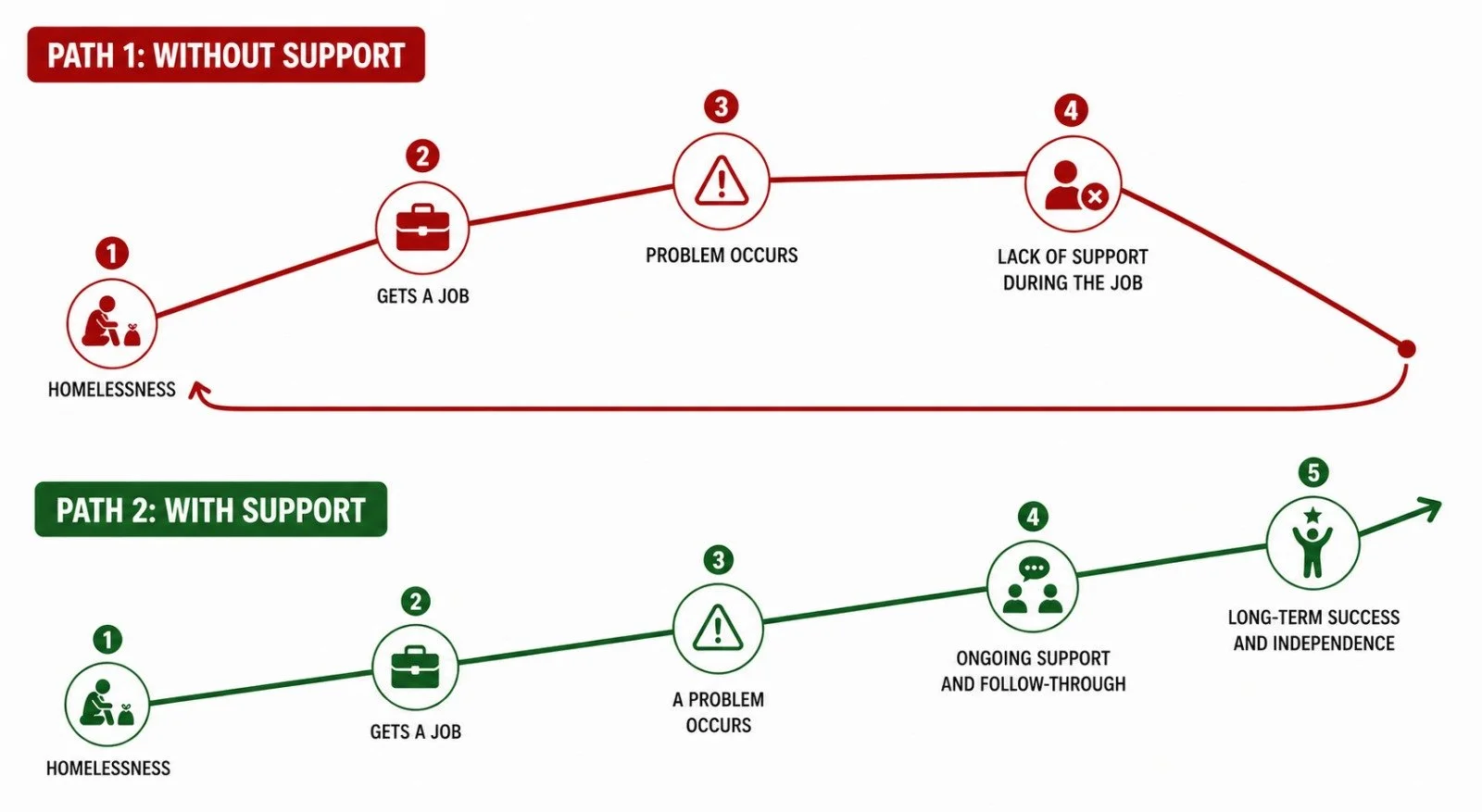
If an individual does secure employment, the probability of sustaining it long term is very slim, a recurring pattern seen as career advisors tend to “neglect” people experiencing homelessness as soon as they find employment believing that they will become fully independent. This lack of follow through identified by the 'Homeless Entrepreneur's’ organisation resulted in the creation of the HELP Program, a one-year program that “provides a support pathway to independence through incentivizing employment opportunities and fostering entrepreneurial activities.”

Having empowered over 3,500 homeless beneficiaries, Homeless Entrepreneur has proven that maintaining network support increases the likelihood of people experiencing homelessness to permanently overcome it. Homeless Entrepreneur was built on the vision of supporting people “willing and able to give their best;” but who lack the network, resources, and continued support necessary to act on that willingness.
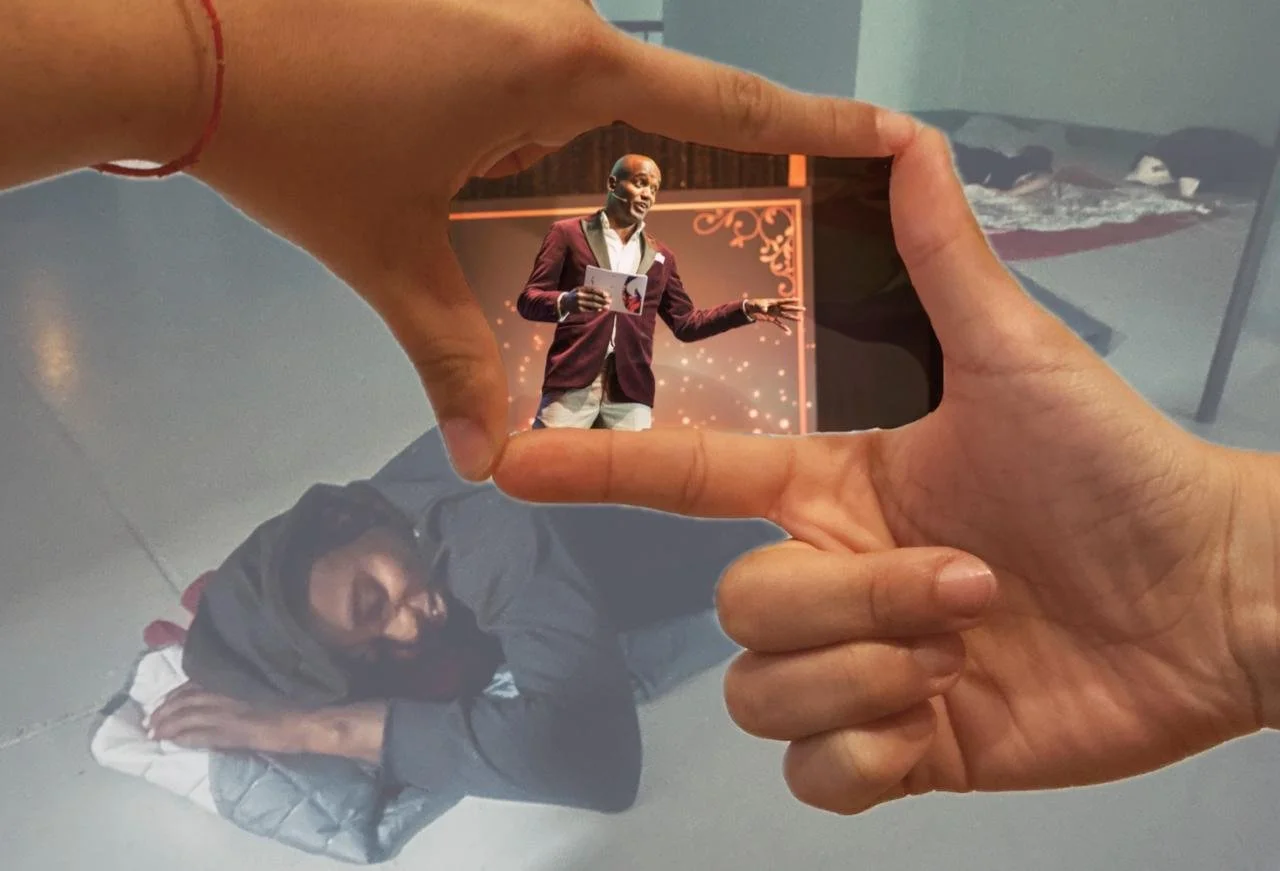
Erik Eklund is a great example of how someone experiencing homelessness can turn his or her life around.

Reframing homelessness unlocks employment opportunities for people experiencing homelessness, by rebuilding personal narrative and dismantling institutional barriers. Supporting individuals in reclaiming their voices and reframing their story improves how they present themselves as respected candidates. But, individual effort alone is not enough; hiring processes must sustain support through training programs, advising, etc. This is what will truly give people experiencing homelessness a fair and sustained chance to rebuild their lives. The discrimination they face is outdated, and it is our collective responsibility to challenge the systems that reinforce their exclusion from the labour market. As Homeless Entrepreneur's work shows, these are people willing and able to give their best, they simply need the network, resources, and sustained support to make that possible. It is time for us to even the playing field, amplify their voices and that as they stand up for themselves, they do not have to stand alone. 

*Thank you for reading this article! If you would like to contribute your thoughts, pictures or videos to this article or believe you have found mistakes and/or misinformation, please contact us and tell us about it by clicking on the button next to this text, so we can take your feedback into consideration.
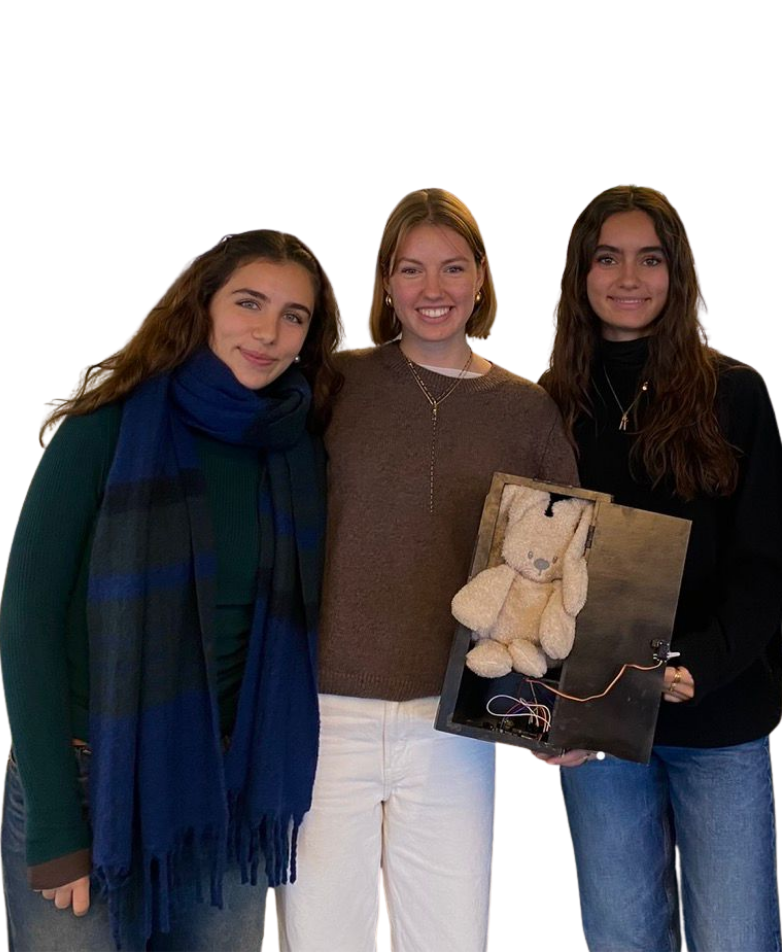
 

Connect with the authors, Johanne Cossin, Mariana Galbero and Esmeralda Ibarra via LinkedIn!


References

APA Citing

1)  Mavromaras, K., King, D., Macaitis, K., Mallett, S., & Batterham, D. (2011). Finding work: Homelessness and employment. Canberra: Department of Families, Housing, Community Services and Indigenous Affairs.

2)  Toporek, R. L., & Cohen, R. F. (2017). Strength‐based narrative résumé counseling: Constructing positive career identities from difficult employment histories. The Career Development Quarterly, 65(3), 222-236.

3) Dillahunt, T. R., Garvin, M., Held, M., & Hui, J. (2021). Implications for supporting marginalized job seekers: Lessons from employment centers. Proceedings of the ACM on Human-Computer Interaction, 5(CSCW2), 1-24.

4) Dunkel, C., & Kerpelman, J. (2006). Possible selves: Theory, research and applications. Nova Publishers.

Editor & VR Review Reflection

Our revision process was informed by two rounds of feedback: a peer critical review of the written article, and a trial VR presentation of our delivery.

On the written side, the early draft of the article we showed to Johanne’s roommate (our designated external editor) presented several weaknesses that required substantial revision. Our theoretical framework, particularly the introduction of the Psychology of Work Theory and proactive personality, was initially underdeveloped. We were name-dropping concepts without fully explaining their mechanics or relevance. So, in response, we rewrote that section to clearly define PWT, explain the role of moderators in practical terms, and make the logical connection to homelessness explicit. 

Similarly, our original framing of the “future story” concept relied on informal language that leaned into referencing manifestation and vision boards; this undermined the academic vocabulary we were aiming for. We replaced this entirely with Markus and Nurius's possible selves theory, which provided the same conceptual function but with proper empirical grounding. We also addressed an imbalance in structure between the individual and systemic sections of the article (we had much more words on personal narrative than systemic biases), expanding the latter to give institutional barriers (such as hiring bias and the marginalization of minority groups) the analytical depth they deserved. We made additional revisions like tightening our thesis statement that repeated itself in the introduction, removing informal phrasing, and relocating the Homeless Entrepreneur quote from the conclusion into the body of the article where it could be properly contextualized (and wouldn’t be bringing up new evidence in the conclusion).

On the delivery side, our trial VR presentation identified three individual areas for improvement: clarity of elocution when responding to questions, speech pace, and overuse of filler words. Each one of us worked on our specific weakness through targeted rehearsal. We also received collective feedback on eye contact and physical presence, which we addressed by reducing dependence on our slides and becoming more intentional about how we occupied the space during delivery (by practicing without notes and filming ourselves to look back on our movements). The Q&A feedback was particularly instructive : our answers, while seemingly okay, missed the precise theoretical vocabulary present in our evidence. So, we revisited our sources and prepared structured answers grounded in PWT and possible selves theory with the help of an AI, to ensure our spoken responses would reflect the same rigor as the written article.

All together, this process helped and pushed us to treat the presentation not as a summary of our article, but as a performance to show our thorough understanding of the subject.



The World Cup Great Walk by Homeless Entrepreneur: 8th Edition From Philadelphia to MetLife Stadium for the FIFA World Cup Finals

Written by Andrew Funk

Philadelphia, Pennsylvania (United States) — From July 14 to 18, 2026, The Great Walk by Homeless Entrepreneur launches its 8th edition, a five-day trek that combines football, dialogue, solidarity, and social impact. This edition’s route travels from Philadelphia to Langhorn, then Princeton, New Brunswick, Elizabeth, and culminates in East Rutherford at the MetLife stadium for the FIFA World Cup Finals. During our journey, we will invite World Cup fans, players and organizations to walk in solidarity with the homeless community, regardless of ticket category, sharing a spontaneous conversation on inclusion and opportunity because we are 26, too!

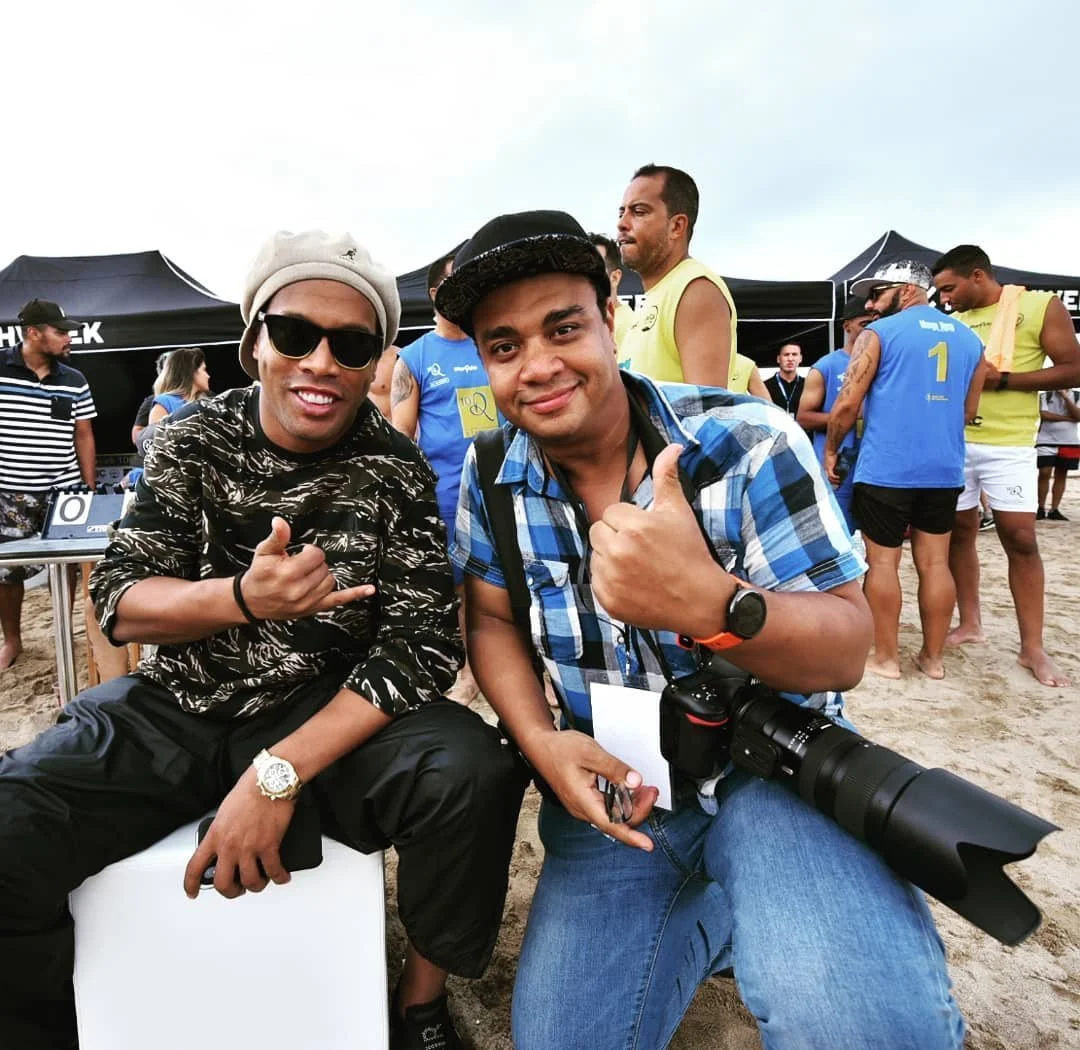
Beto de Souza, a Homeless Entrepreneur, has captured memorable moments of football stars through the camera lens that got him off the streets i.e. Messi, Ronaldinho, Halland, Lamine and Vinícius Júnior.
— Photos by Beto de Souza

Along the route, The Great Walk will identify people experiencing homelessness in the host countries of the FIFA World Cup and extend outreach to global homeless populations through our social media reach, press and ongoing partnerships. We will engage a broad network of local, regional, national, and international organizations and government bodies to strengthen pathways out of homelessness. The project ensures funds and support flow through transparent channels to deliver practical help, skills training, and durable pathways out of homelessness. Local partners like Project Managers without Borders anchor the US network, while Bit2Me, IBM SkillsBuild and IEBS provide finance, digital skills and employability as well as entrepreneurship education.

In the previous Great Walk towards the World Economic Forum, we’d like to highlight Give Back and Start Over Movement for funding our programs and projects; and Europe's #1 MasterMind by Patrick Wind, which offered strategic mentorship and funding.

Homeless Entrepreneur proudly carried its Swiss Great Walk flag during the 7th edition to highlight organizations and individual support.

Evening events along the route will bring together organizations and communities to raise funds, engage the public, and identify individuals who can benefit from Homeless Entrepreneur’s Helpline (+34 697 877 089), Voices, and HELP program. At the MetLife stadium, we will have brief, on-the-spot interviews with FIFA fans, players and organizations because we are 26, too! Andrew Funk, founder president of Homeless Entrepreneur, will invite participants to take 150 steps (45 seconds) in solidarity with 150 million homeless people while being interviewed, so they can share how the FIFA World Cup community can empower people made of potential out of homelessness.

Desired Outcomes for this edition:

  • Funds raised: 150,000€

  • Social impact: 1,500 new program beneficiaries

  • Partnership: 5 new long-term partner

  • Visibility: over 1,500,000 online impressions

Our official spokesperson is Andrew Funk, Founder and President, Homeless Entrepreneur:

The Great Walk always concludes with a community celebration and a public showcase of participants’ progress, linking local action with international collaboration. For updates, please follow us on LinkedIn and/or follow Andrew Funk on Instagram; or to get involved, please contact the spokesperson above.

Watch the Project Management Institute (PMI) video below to learn more about how project management is helping empower people made of potential out of homelessness via Homeless Entrepreneur.

Home Documentary Looking for Investors to give Film a Home

Miles Blayden-Ryall is a multi-award winning, double-BAFTA and Emmy nominated documentary filmmaker who reached out to us regarding his next project, ‘Home’ , a feature documentary exploring the homelessness crisis.'

WELCOME HOME!

We need your help to raise completion funds for our socially urgent feature documentary about homelessness and displacement.

FILMMAKER STATEMENT

As a filmmaker I’m driven by curiosity about people, choices, and the invisible forces that shape who we become and motivate what we do. No matter the story, my work always begins from the same place: empathy and fascination with what lies beneath the surface of a life.

Home builds on my previous work, bringing my practice closer to where I live and to the moral crises at the heart of modern Britain and the wider world. It’s more immediate and political than my previous films, but still deeply personal. Using vérité, master interview, archive, and animation, the film immerses us in the outer reality and inner world of a man rendered invisible by a broken system that’s failing so many.

Personally, my creative lens has been shaped by a lifelong drive to understand belonging: what helps people feel safe, seen, and connected. Challenges in my early life, and later learning I’m neurodivergent (including dyslexia and ADHD) alongside anxiety, helped me make sense of how I’m wired and how I work best.

The upside is that it’s given me a practical set of strengths: I notice what others miss, I’m sensitive to power dynamics, and I’m good at earning trust without forcing it. I listen carefully, I stay patient, and I try to create the kind of space where people can speak honestly, sometimes discovering something real as they say it out loud.

Artistically, Home’s success will be achieved by transcending its subject matter and connecting with audiences anywhere, regardless of their proximity to homelessness or to London. At its core, it’s a story about the things we all understand - love, loss, identity, meaning, safety, connection and belonging. The hope is that the film moves people not through spectacle but through empathy, and in doing so, moves something in the world too.

HOW YOU CAN HELP

We are currently raising money through investment, sponsorship and crowdfunding to complete our socially urgent feature documentary. A link to our crowdfunding page is at the end of this blog post, along with contact details of the film’s director if you wish to discuss the film, its impact campaign or funding.

THE FILM

HOME is a raw character-led story exploring displacement, homelessness and belonging through one person’s incredible journey.

Arriving in the UK as an 18-year-old refugee from the Bosnian war, ALEN built a new life in London with a wife and four children only to lose it all again due to forces out of his control.

In the aftermath of the Grenfell fire in June 2017, Britain’s deadliest residential blaze of modern times, Alen finds himself homeless, fighting to reclaim a place in the city that once took him in and then quietly began to erase him. 

Following a gruelling eight-year mission for justice, the film bears witness to the human cost of political negligence, corporate greed, and systemic failure - embodied by Grenfell Tower, and echoed across the world.

As global displacement reaches unprecedented levels, Alen’s search for home asks us what that word really means, who gets to have one, and what is lost when safety, shelter, and dignity are treated as privileges rather than human rights.

The documentary is being produced by a diverse and multi-award-winning collective of filmmakers who share a singular united vision to do justice to the story we are telling, both artistically and with its social impact. This goal will be delivered not only by the end-product, but through the journey to get there.


COLLABORATING WITH HOMELESS ENTREPRENEUR


As we all know, displacement isn’t restricted to one city or one country, it’s a global issue. In recognition of that, we’re collaborating with Homeless Entrepreneur, an NGO that supports people experiencing homelessness to rebuild their lives. One way they do this is through their innovative HELP Program, a practical model that helps people become self-sufficient by supporting them to develop business ideas, find work, and reintegrate into society.


Our film’s subject, Alen, is now in a position to rebuild. He has a home, a job, and is working to reconnect with his family. And not only that, he has also volunteered to become a mentor to someone in the HELP Program.

Inspired by the way the film can begin contributing to real-world impact, we’ve offered to sponsor Alen’s mentee. This circular, community-driven collaboration reflects both the values behind how the film is being made and the message at the heart of the story.

We’re honoured to support Alen’s mentee, Eric Ross, as he navigates the daily obstacles of homelessness and takes steps toward stability, work, and home.

HOW THE MONEY WILL BE DISTRIBUTED

The money raised will help towards paying the post-production costs which include:  editing, colour grading, sound design & mix, music composition, archive clearance, and creating a final master of the film ready for its launch. Funds raised will then enable the film’s impact and film festival campaigns, where we aim to attract distributors and broadcasting partners.

These costs can stretch into the tens and even hundreds of thousands, but due to the kindness and generosity of our collaborators and supporters we are able to keep these costs down. This means any contribution you make will go even further!

WHERE TO SEE THE FILM

We’re scheduled to complete the documentary by August 2026, followed by a premier at a world renowned film festival, and subsequent festival run.

Our goal is to then expand the film's reach, and its message, as far as possible via an international theatrical release, and transmission on a streaming service and/or international terrestrial broadcast channels.

THANK YOU!

Homelessness does not exist in isolation from the wider forces that shape our world. It is part of the same pattern of dispossession we see in Gaza, in Ukraine, and in every place where lives are uprooted by war, violence, or state failure - countries like Sudan, the Democratic Republic of the Congo, and Ethiopia, where wars even rage largely out of view.


Alen himself embodies this connection. He arrived in Britain as a refugee from Bosnia, where the collapse of a multi-ethnic society spiralled into ethnic cleansing and mass displacement.


Decades later, in London, he found himself once again without a home - this time not because of bombs or militias, but because of bureaucratic indifference and systemic neglect.


The continuum is chilling: whether through missile strikes in Mariupol, air raids in Gaza, or fire safety failures in West London, the result is the same - ordinary people made disposable, stripped of safety, belonging, and dignity.


Alen's story is not singular. We walk past hundreds of people just like him every day. But in a post-truth world drowning in disinformation and division, it’s easy to look away. Home urges us to stop, to listen, to question, to understand, to care. To confront the systems that decide who is visible, and to see perhaps for the first time, those they have tried to erase.


Ultimately, Home is not just a documentary. It's a call to conscience, a catalyst for change, and a powerful cultural document for a world at a moral crossroads. We all want to know we matter, so let's stop living as though some of us don't!

Home’s Crowdfunding Page - Help us Complete Post-Production:

https://www.crowdfunder.co.uk/p/qr/DlX0Z0jl?utm_campaign=sharemodal&utm_medium=referral&utm_source=shortlink

Director’s Contact Details. Would you like to Sponsor or Invest in the film: